Return to the Fire - an interview with artist Chris Lewis
with Alex Whittaker, April 2026
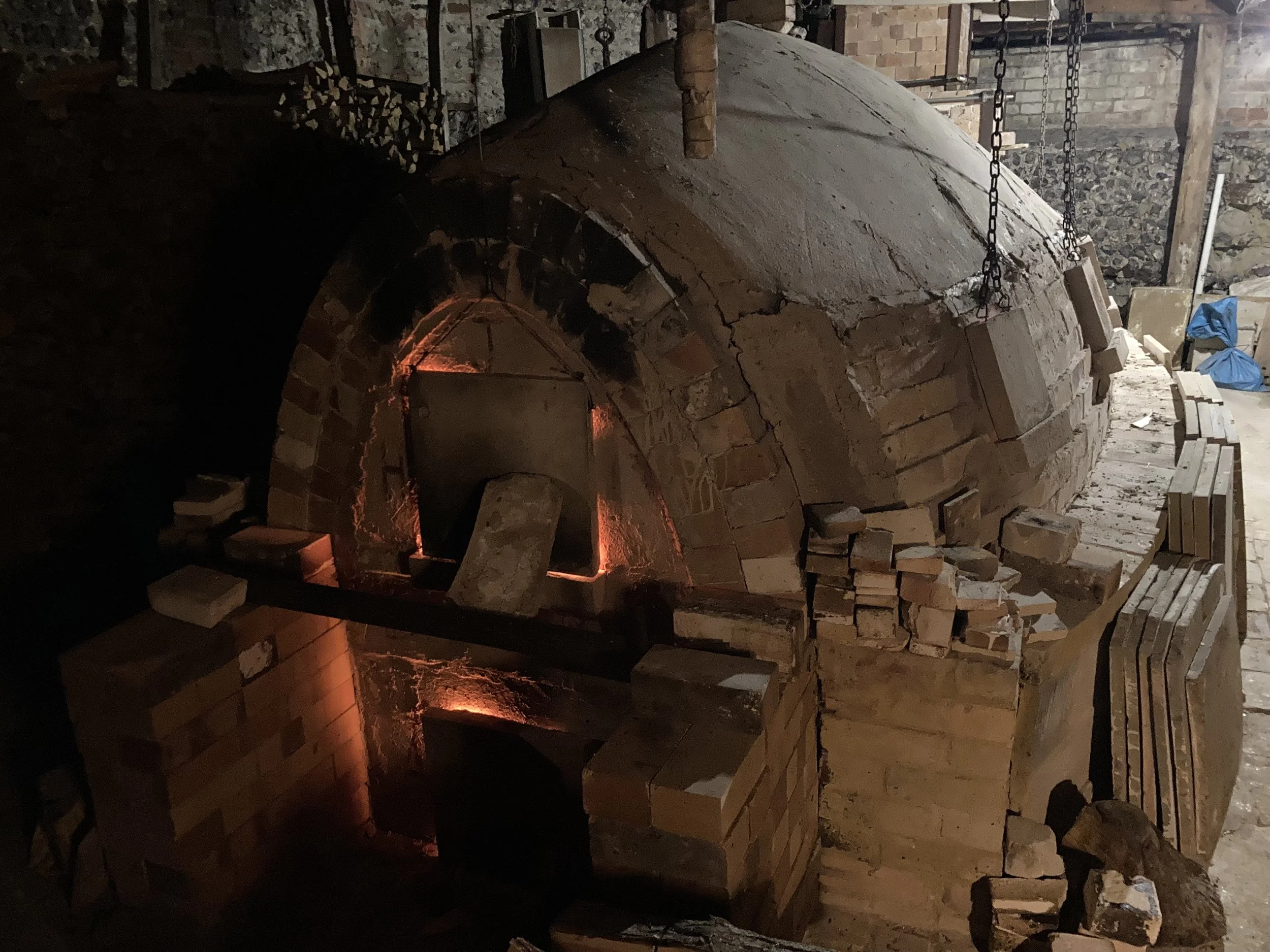
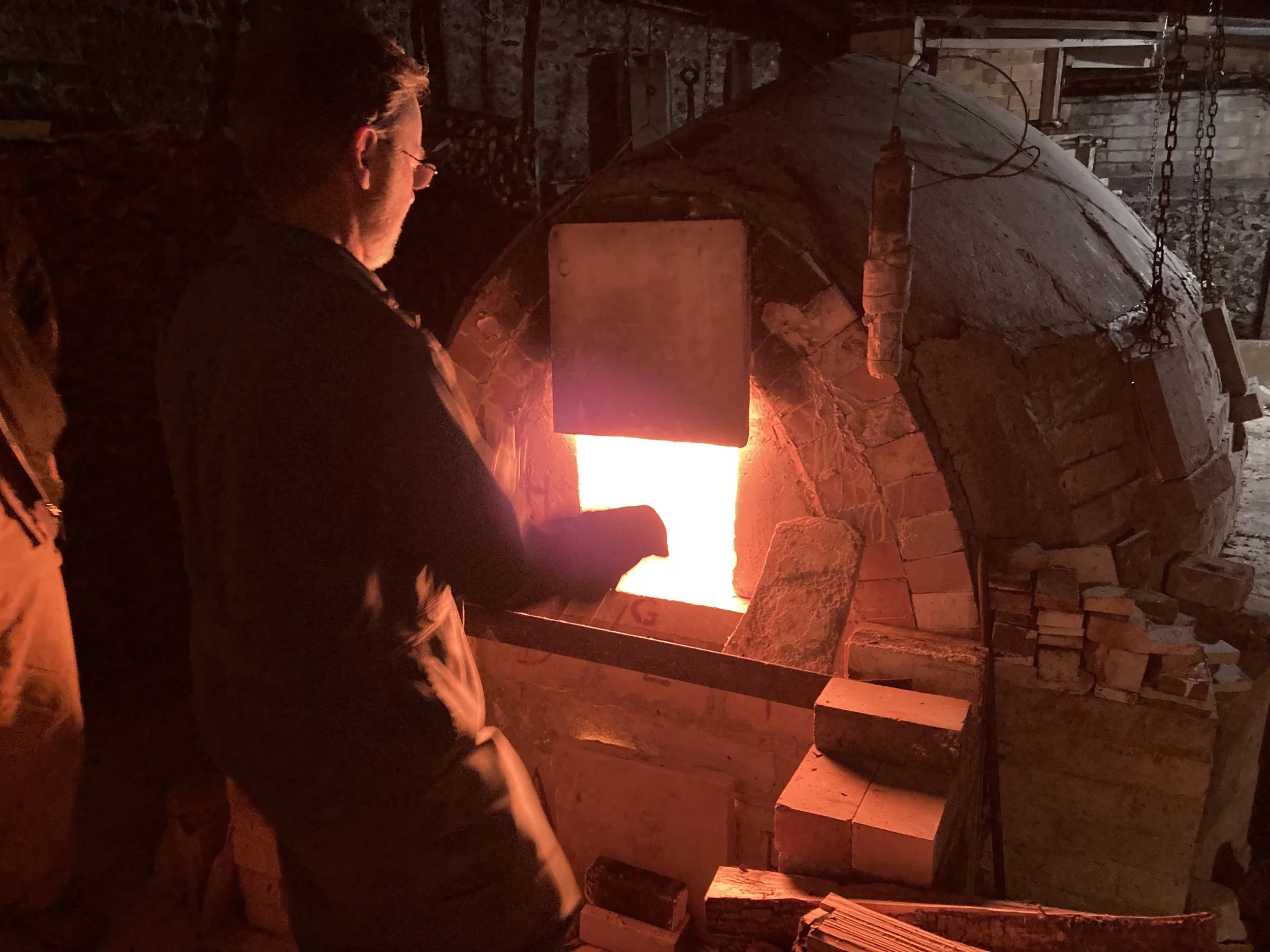
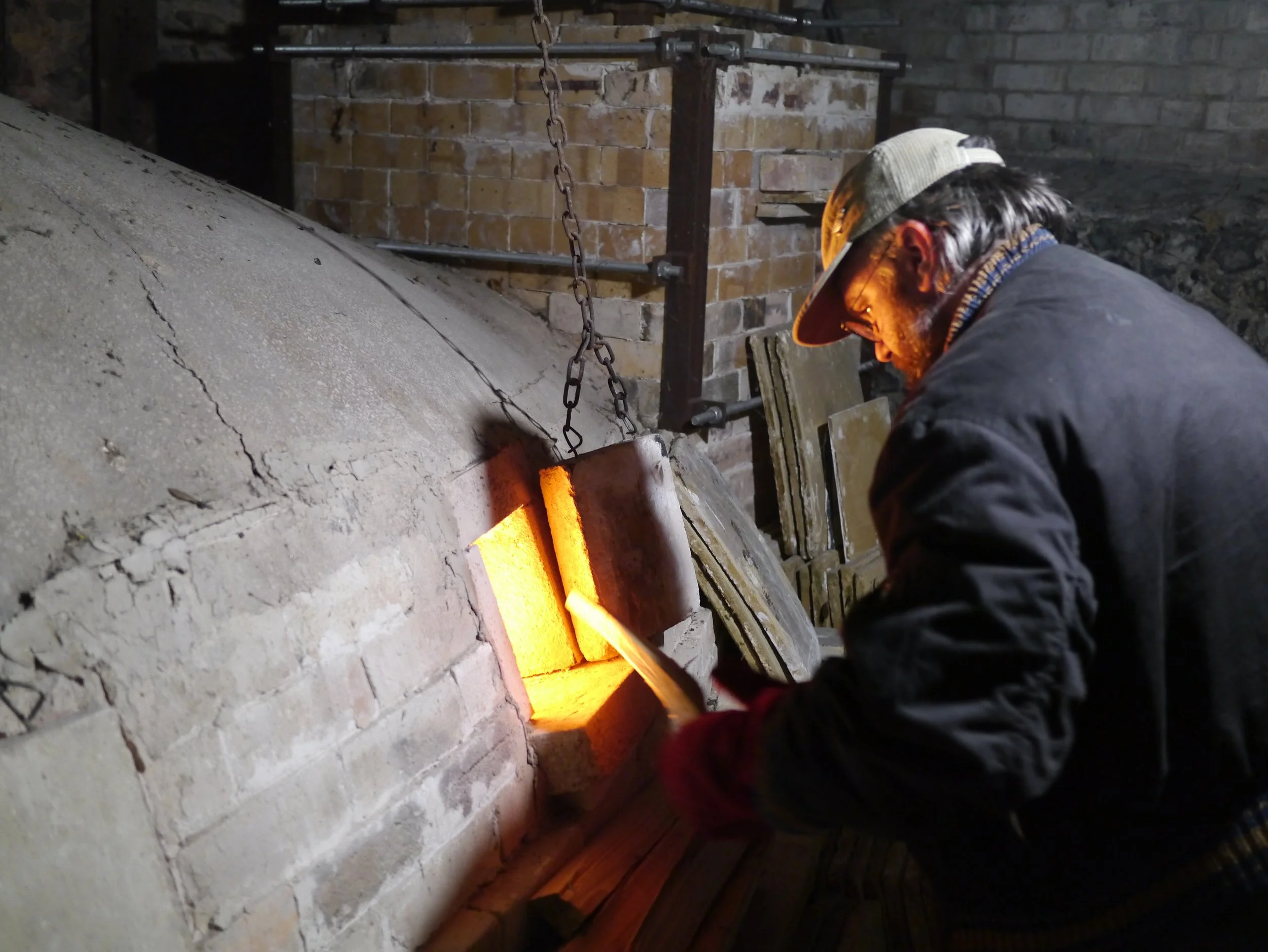
In the spring of 2025 Alex Whittaker visited Chris Lewis at the South Heighton Pottery in Sussex, England to participate in one of his legendary anagama wood firings. This traditional Japanese method, which involves stoking a large wood fired kiln, twenty-four hours a day for over a week, produces some of the most sought-after contemporary ceramics made today. A link to the original article can be found here.
One year later, Alex returns to South Heighton to visit Chris as he prepares for another anagama firing, having spent time over the past year both travelling and developing ideas for new works. The following conversation provides a fascinating insight into the mind of one of England’s pre-eminent master potters as he talks about the trans-cultural aspects of his practice, his connection to Mingei, how to stay happy in 2026 and more… !
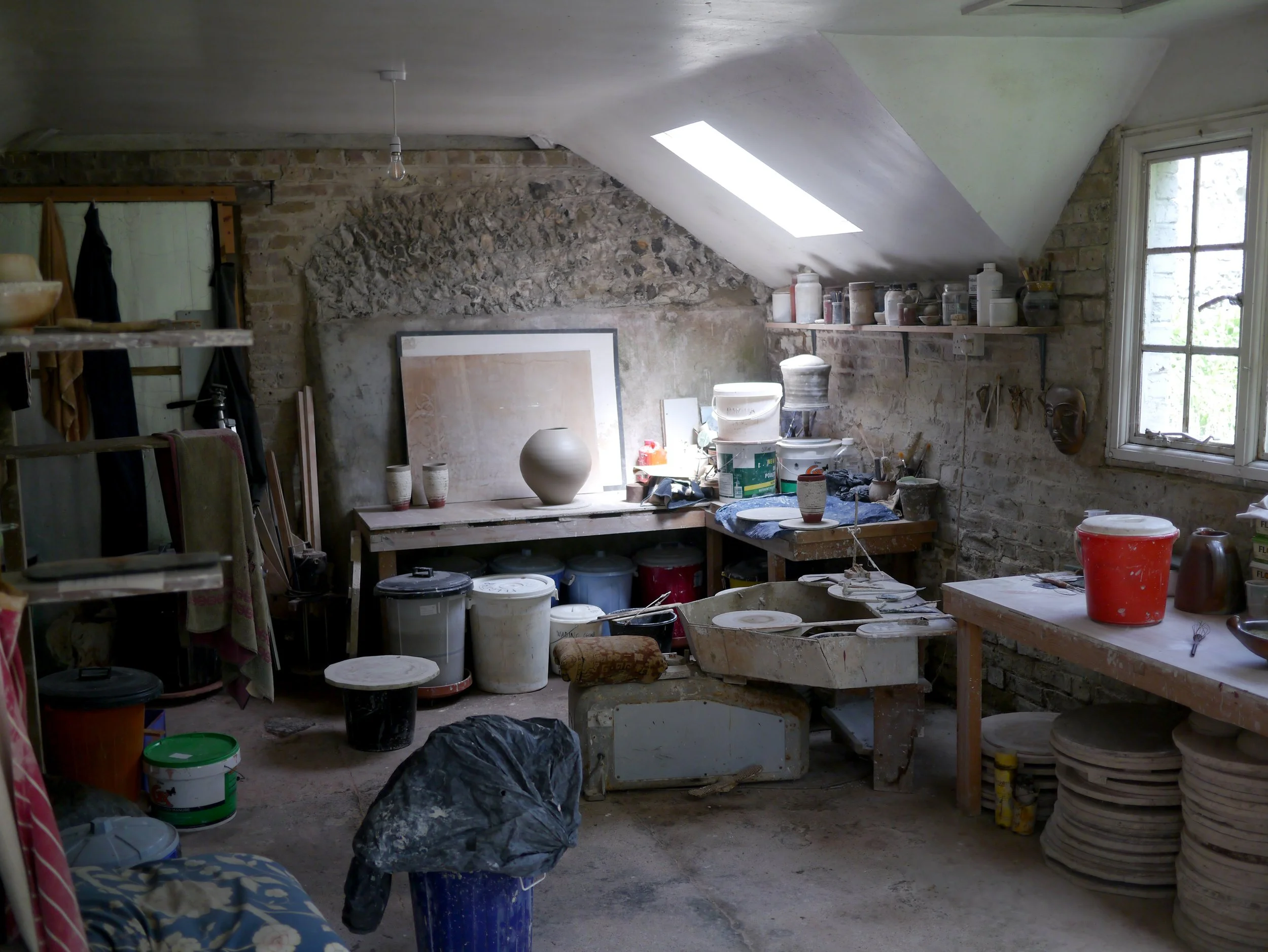
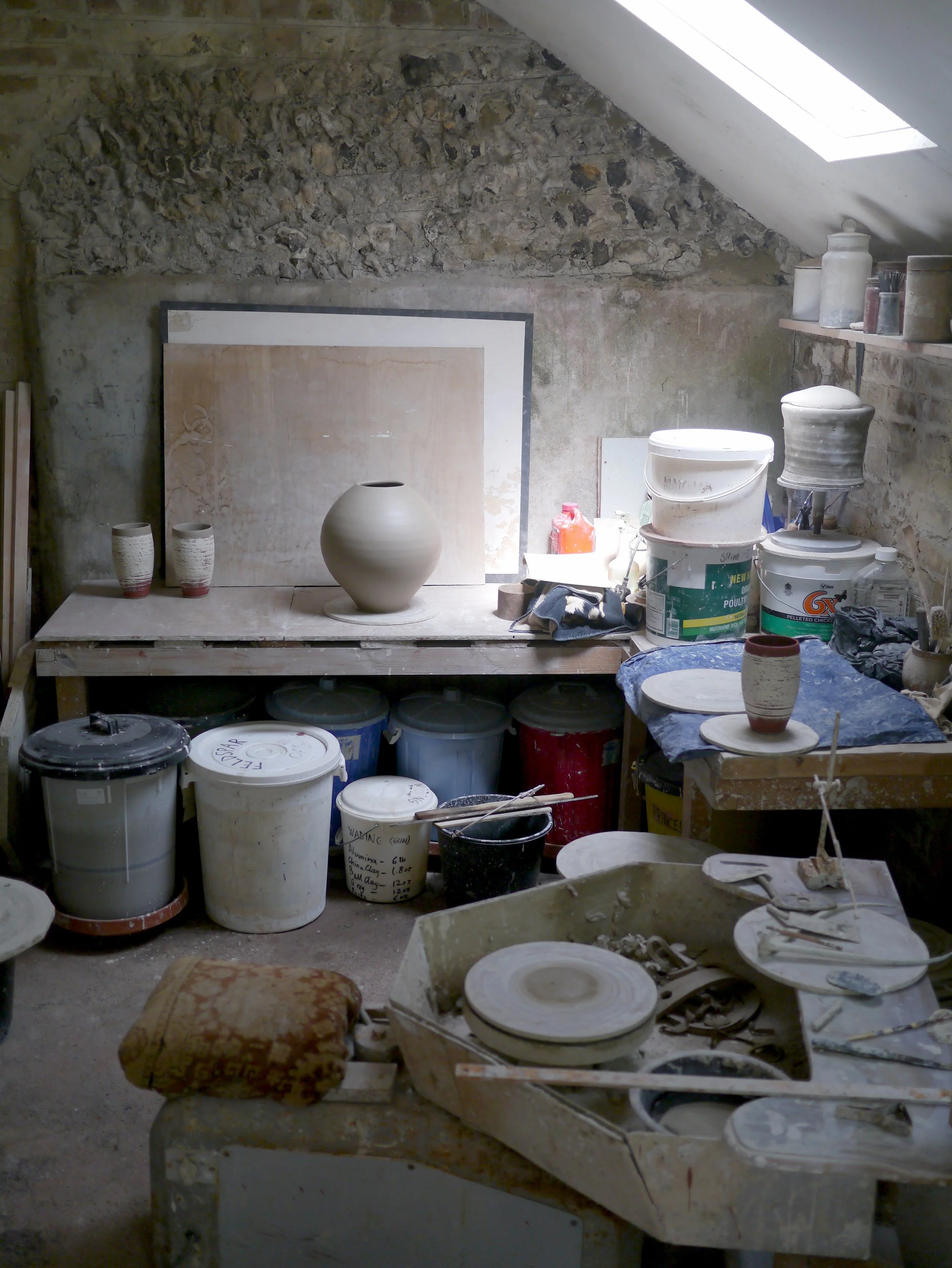
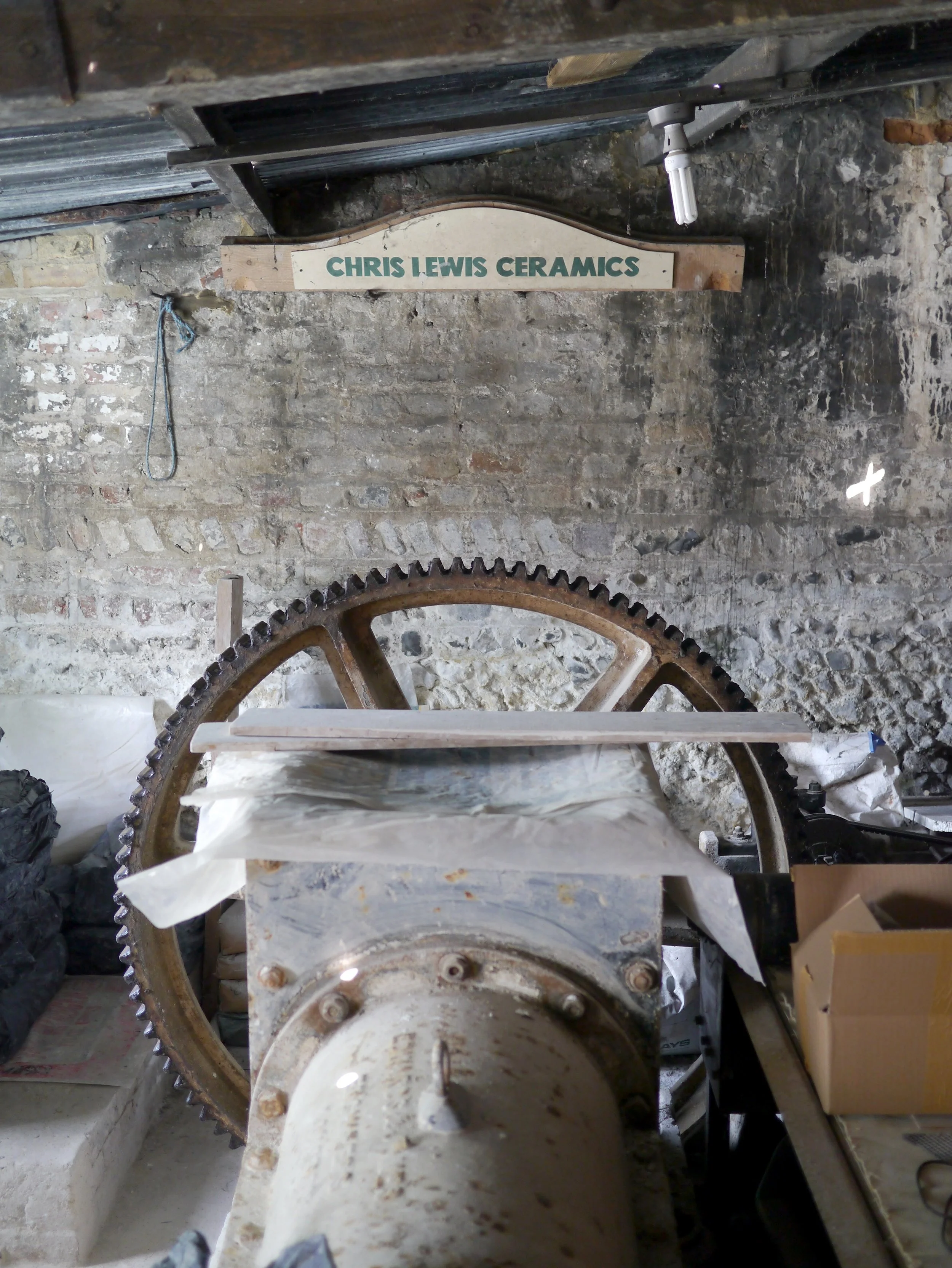
Chris Lewis’ studio at South Heighton Pottery, East Sussex, England
AW: Since it has been almost exactly a year since we met for the annual firing of the anagama last April, I was wondering how the last year has been for you and if there have been any developments in your practice ? Can we expect to see a large kiln firing again this spring ?
CL: I am planning to have a firing in the anagama this spring, most likely at the beginning of May. Since the last firing, in April 2025, I have been steadily making pots, starting with the largest as they take the longest to dry. For the past month or two I have concentrated on smaller pots and individual pieces that are developments on ideas that I have had in mind for a while. These innovations tend to arrive slowly and need a lot more time to make than the things that I repeat on a regular basis. Consequently, there are fewer of them, but some will become regular features in subsequent firings.
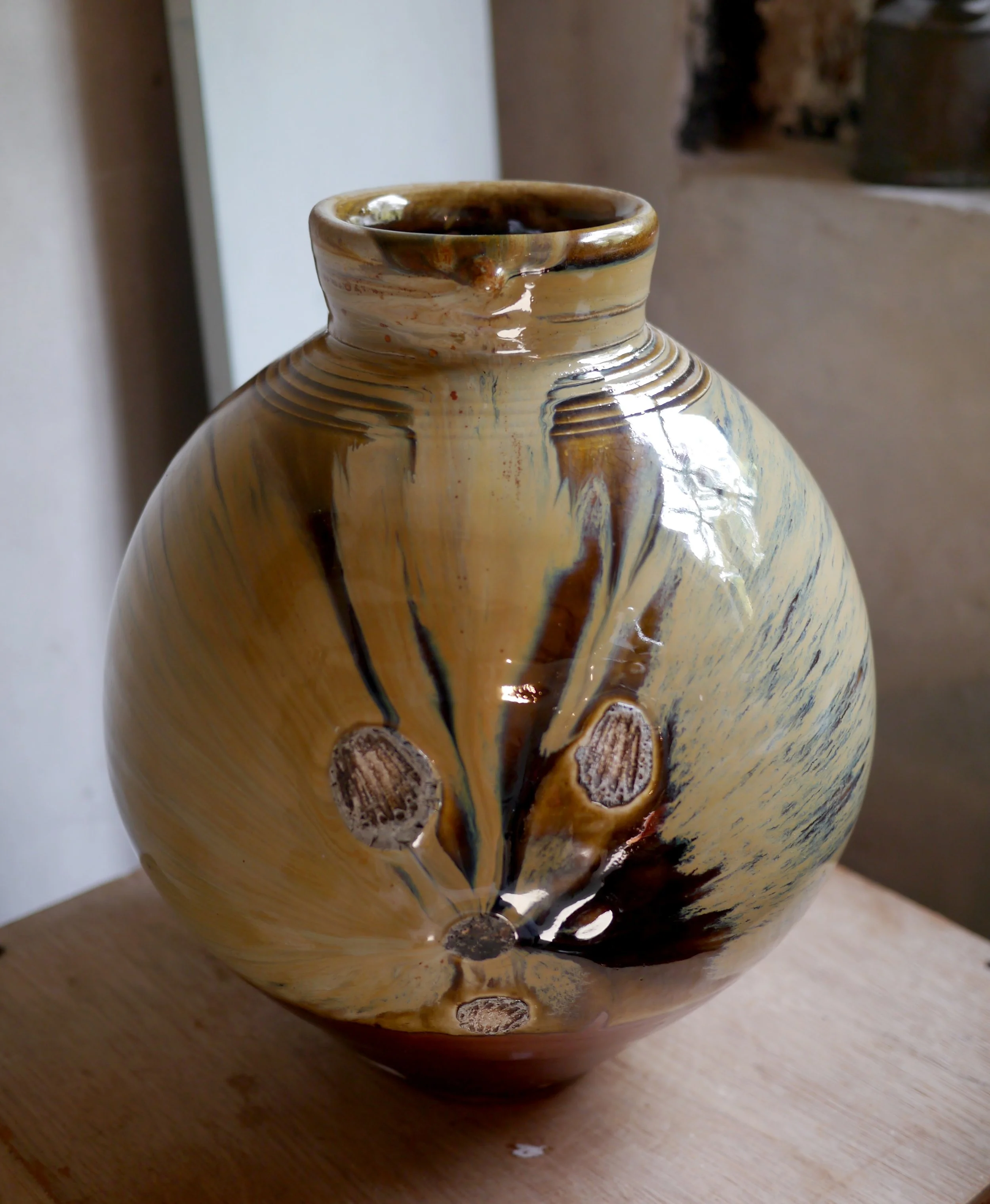
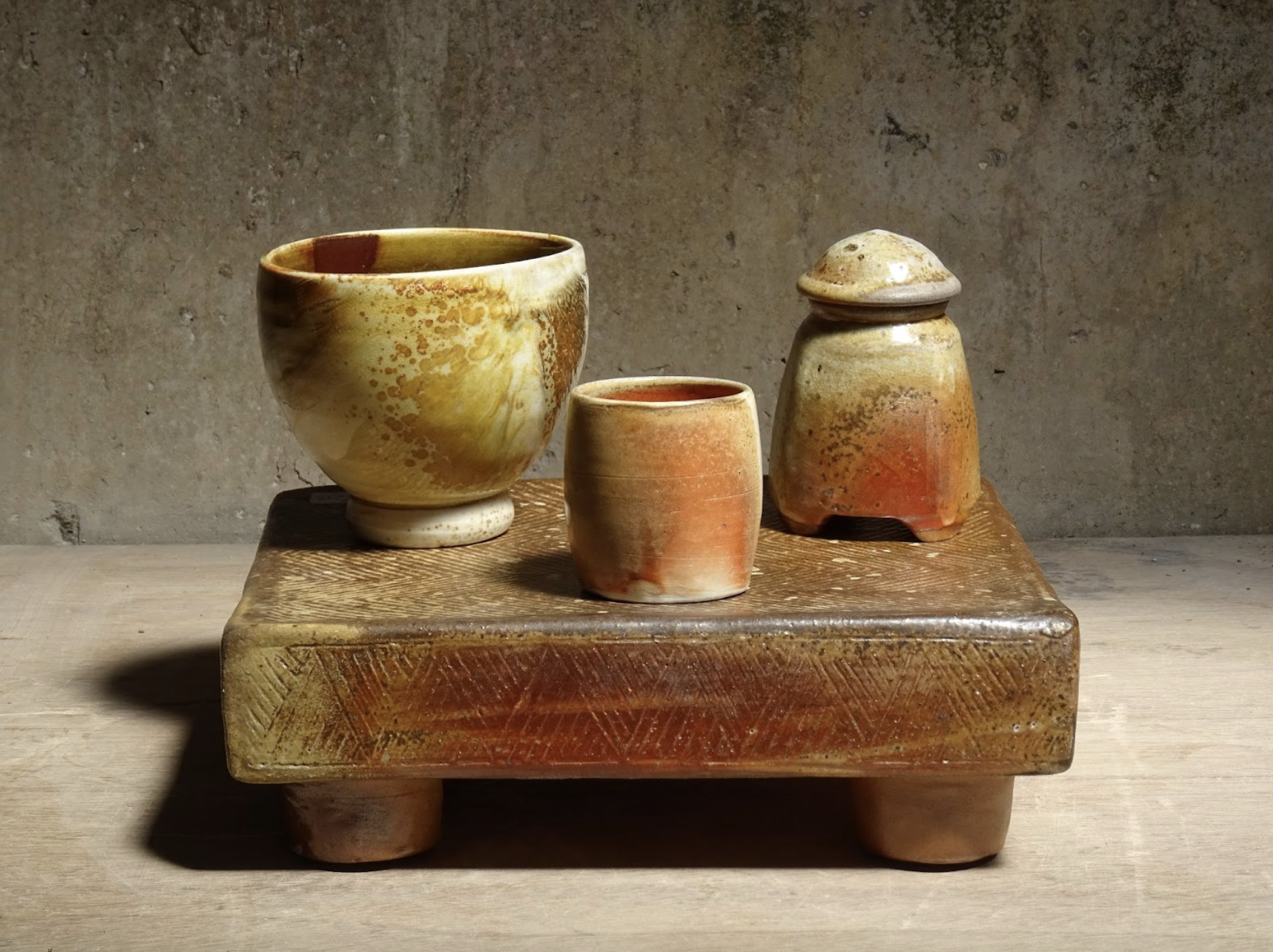
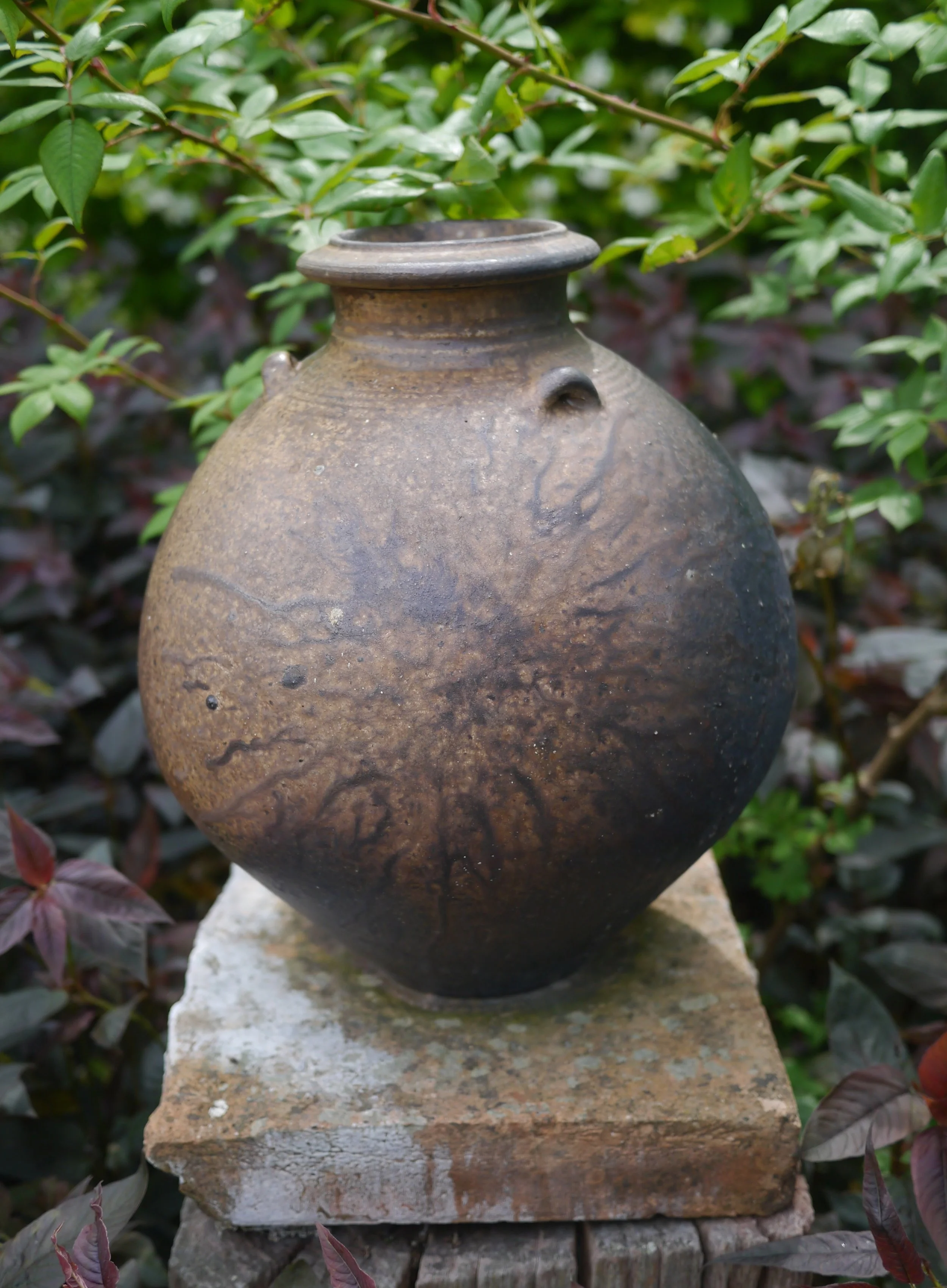
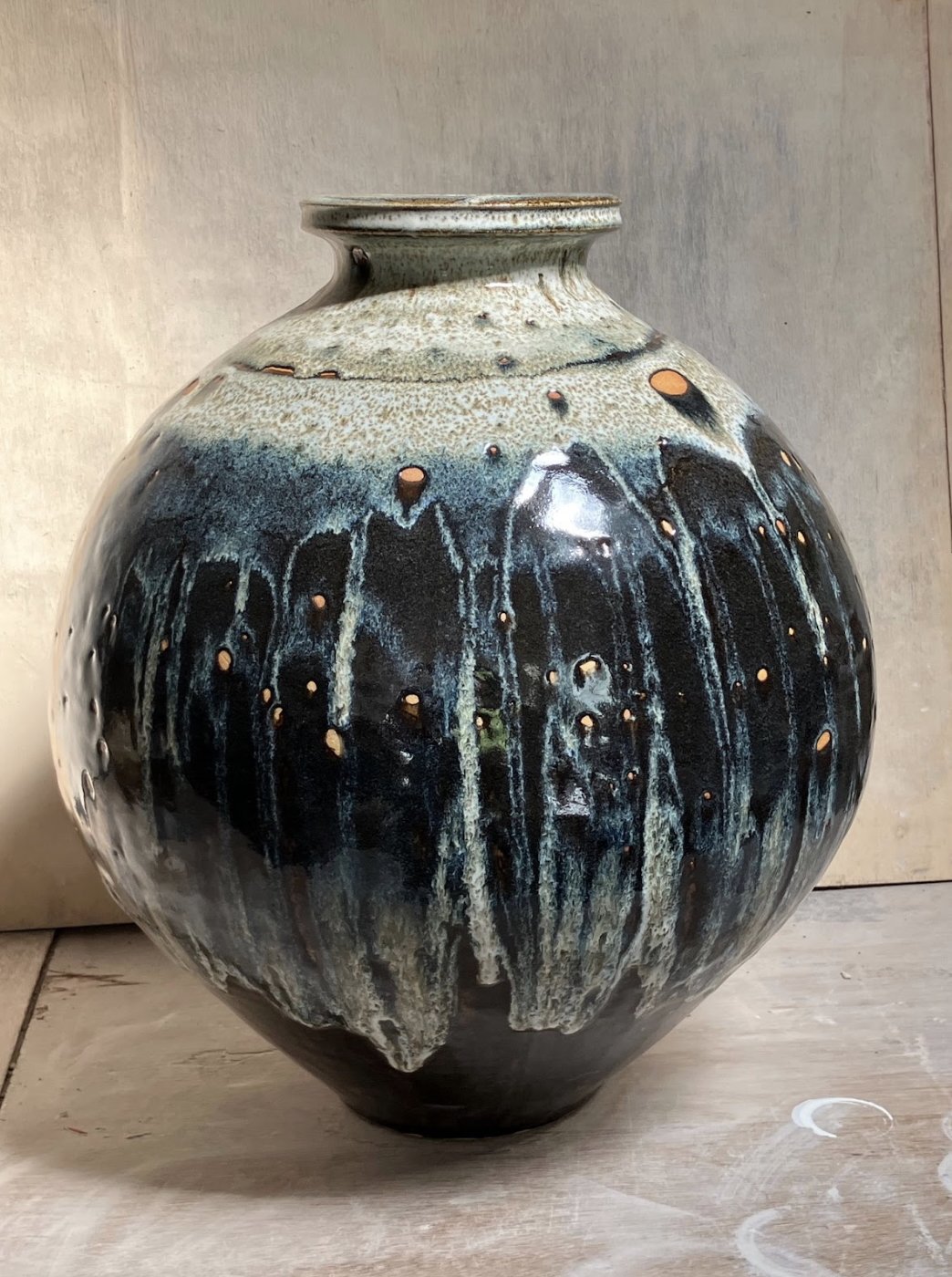
Anagama fired jar form, with local shell ‘spur’ marks visible and intact
AW: The last time we spoke, you were just about to depart for Crete where you were enthusiastic about the collection at Heraklion and you’ve recently since returned from a trip to Cambodia and Thailand. How much does travel and the pottery of diverse, overseas traditions inform you current work ?
CL: The pottery of other cultures has always been an important inspiration for my work. I first saw the pots from the Minoan civilisation on Crete in 1984 and they really impressed me. Since then, they have built a new museum in Heraklion and the display is wonderful. The forms are beautiful in their simplicity, and the painted decoration of plant and animal life is stunning. I seldom paint decoration on my pots these days, but when I used to I often had those painted designs form Crete in the back of my mind. I’ve had similar encounters with traditional pots and their contemporary makers in various parts of the world including Nigeria, Burkina Faso, Thailand, and the Americas. On the recent trip to Thailand I was particularly interested to see the 12thC excavated kilns at Si Satchanalai which strongly resemble the Anagama that I use here at South Heighton.
AW: We spoke already about Mingei makers, for whom making sparsely decorated, utilitarian pots was almost an act of resistance against the slow creep of modernization in early 20th century Japan. This seems relevant again as we enter a new era of technological development. I wondered if making pottery stills feels like a radical act of resistance to you, and if so, what are we resisting ?
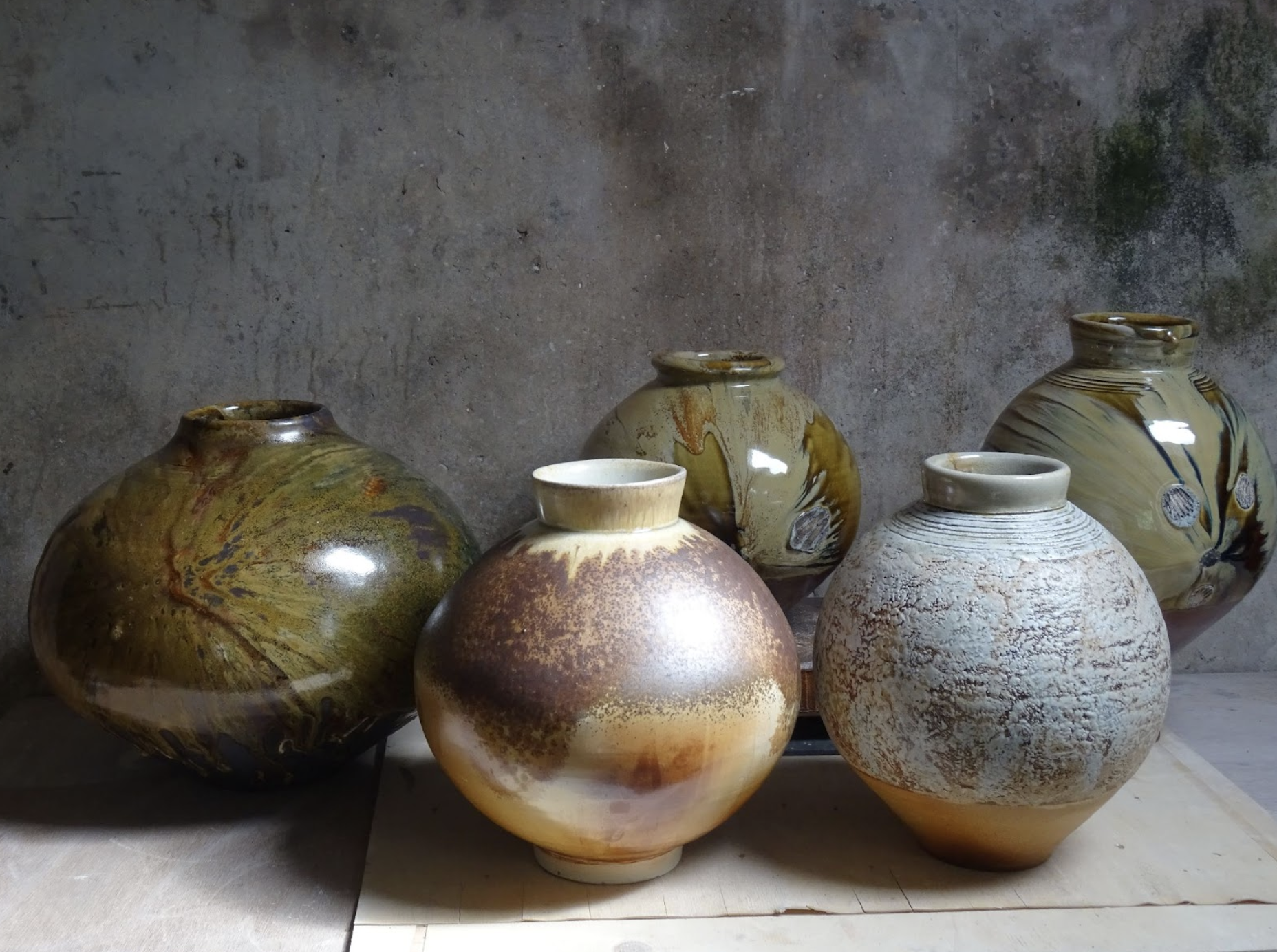
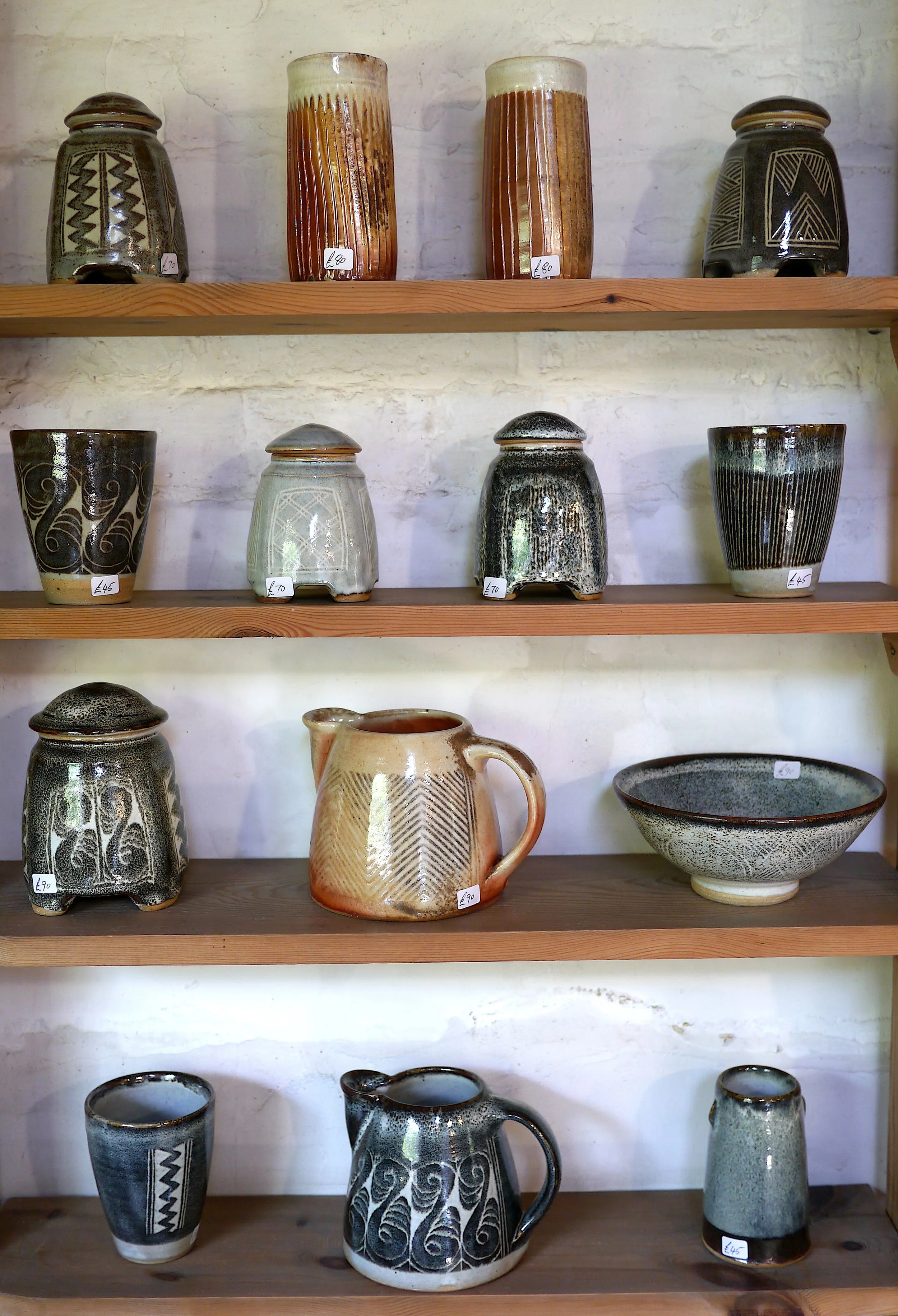
A selection of various jar forms displaying a variety of glaze finishes.
CL: I think the main act of resistance for me has been to avoid entering the world of employment. Being self-employed has many challenges, but the sense of satisfaction to be gained from having control over one’s own work life overrides all the obstacles that get thrown in the way. I often feel thankful that I’ve never had to endure the daily grind of commuting to work or being subject to the whims of an unpredictable employer.
AW: The pottery at South Heighton was originally set up by Ursula Mommens in 1951 and you arrived here yourself in 1976, exactly 50 years ago. If there was one piece of advice that you could give yourself upon arrival back then, or indeed to any newly aspiring ceramic artist, what would that be ?
CL: The best piece of advice I received when I was looking for somewhere to train as a potter was to look for the place where the best work was being done and try not to worry about the pay and conditions. Consequently, I started working at a pottery where everything was done on a huge scale in a traditional way with phenomenal skill. The pay and conditions were dire, but the training was all I could have hoped for.
AW: We have seen resurgence of interest in studio pottery again since around 2010 and, given that we live in a postindustrial society, what do you think is driving this renewed interest (aside from The Great Pottery Throwdown !).
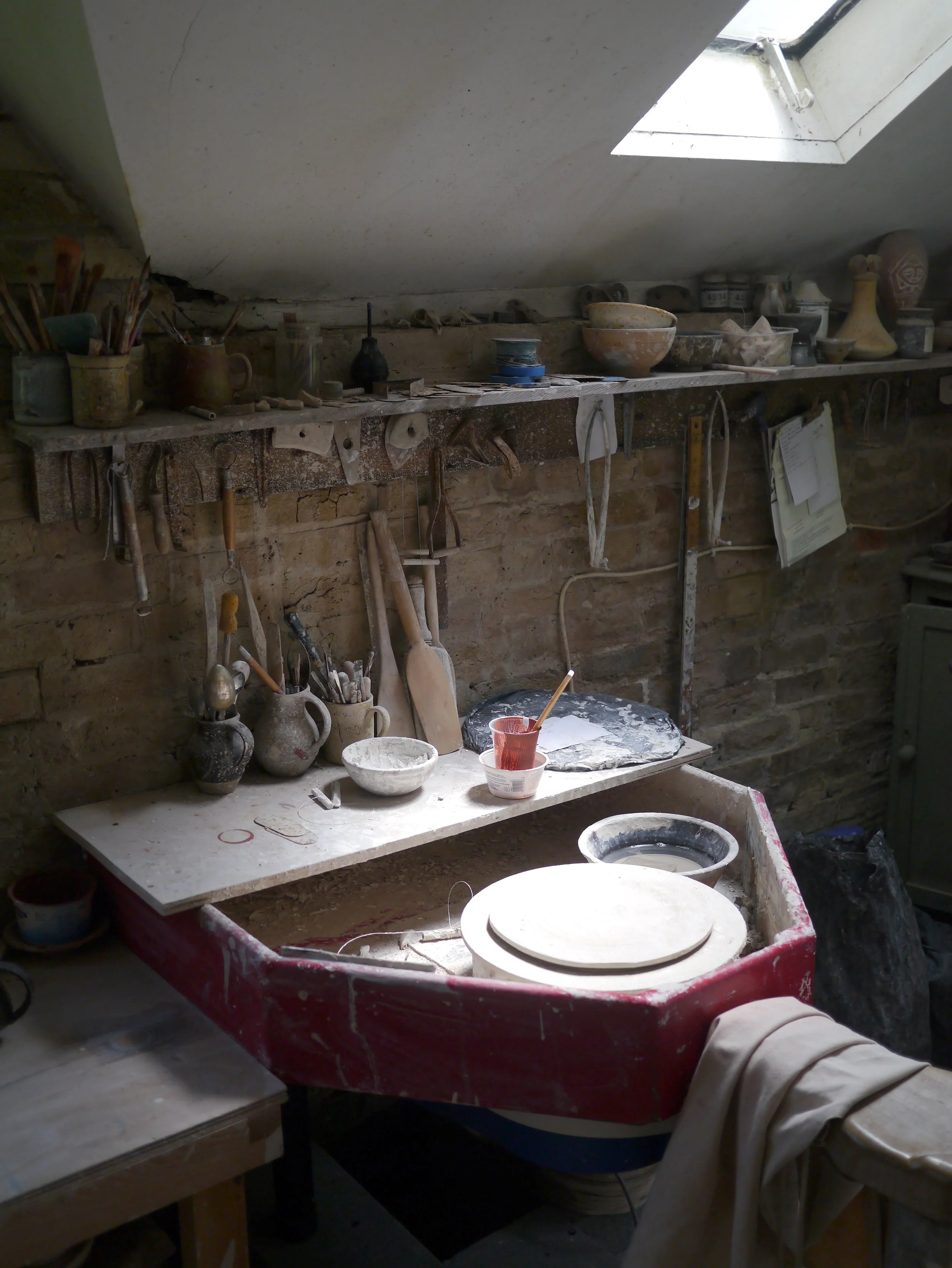
The potter’s wheel at South Heighton
CL: I don’t really know, but I suspect that it’s a lifestyle choice. It seems to have become evident that leading a life of self determination and creativity is good for mental wellbeing.
AW: The last time we met you mentioned that you much preferred the work of Michael Cardew to Bernard Leach. Having since read Cardew’s autobiography ‘A Pioneer Potter’ I also started to think that he might in fact be the more interesting artist. Can you tell us a bit more about what it is that makes Michael Cardew’s works standout to you ?
CL: In 1974 I went to Michael Cardew’s pottery in Cornwall to help with a two day firing of his two chambered woodfired kiln. His house and workshop was the first studio pottery I had ever visited, and it was a revelation. Not only was I seeing fine quality handmade pots for the first time, but I was also eating off them and being surrounded by examples of his work from all periods of his 50 year career. It is difficult to explain the impact that that experience had on me. I can remember sitting at his table, looking at a simple sugar jar that he had made at Winchcombe pottery in the 1930’s. The combination of its shape and the depth of colour in the glaze were just mesmerising. The dresser as well as the rest of the house was full of the most beautiful pots I had ever seen, both slipware and stoneware. Many of them had been brought back from his time in Ghana and Nigeria, and it was this connection with West Africa, a part of the world that I had long wanted to visit, that ensured my continuing fascination with the work of a man that I still think of as one of the most influential figures in studio pottery.
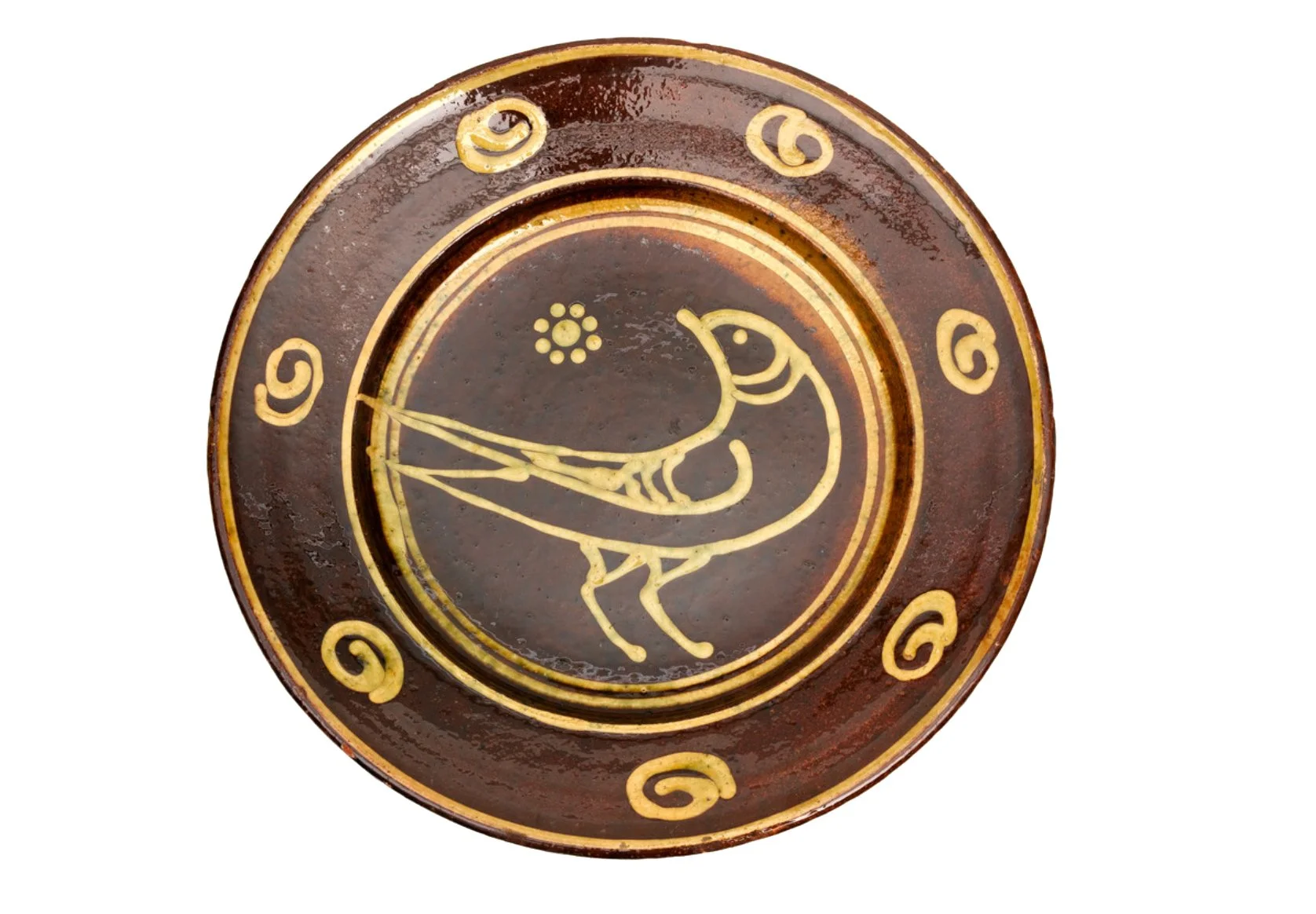
Michael Cardew, earthenware platter with slip trailed design of bird. c. 1930 - 1935
AW: One of the main things that strikes me about your work is that you manage to keep it varied and interesting, often with what appear to be many different experiments going on at the same time. Have you got any tips on how you stay engaged with new ideas and how to avoid simply repeating your most successful works ?
CL: I spend a great deal of time looking at artefacts in all sorts of different materials from innumerable different cultures. This can be in books, museums, galleries, on trips to diverse countries and these days also on the internet. I am fascinated with the diverse ways that makers come up with to make things that essentially serve the same purpose, that is to contain things. Sources of inspiration are seemingly endless.
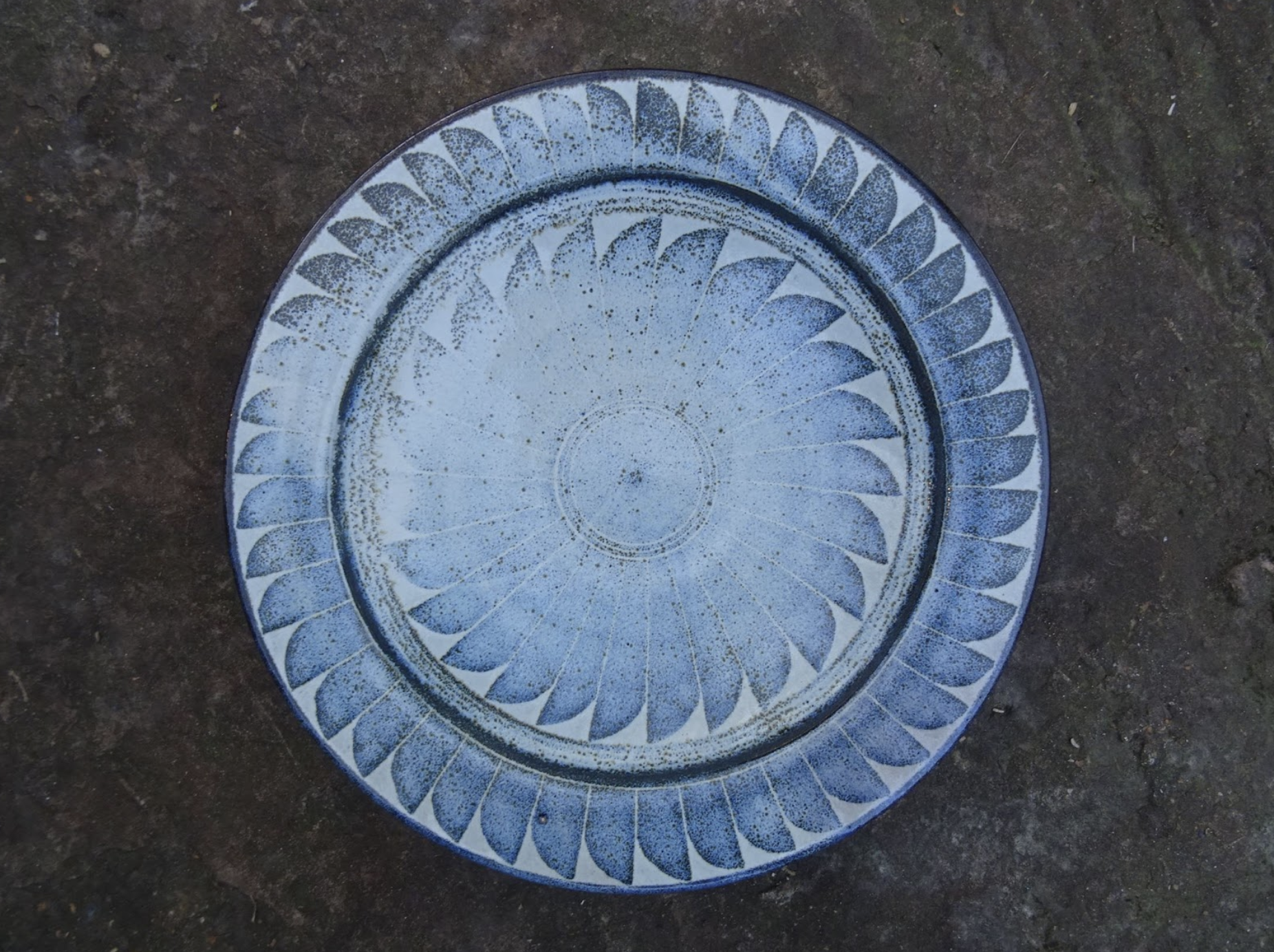
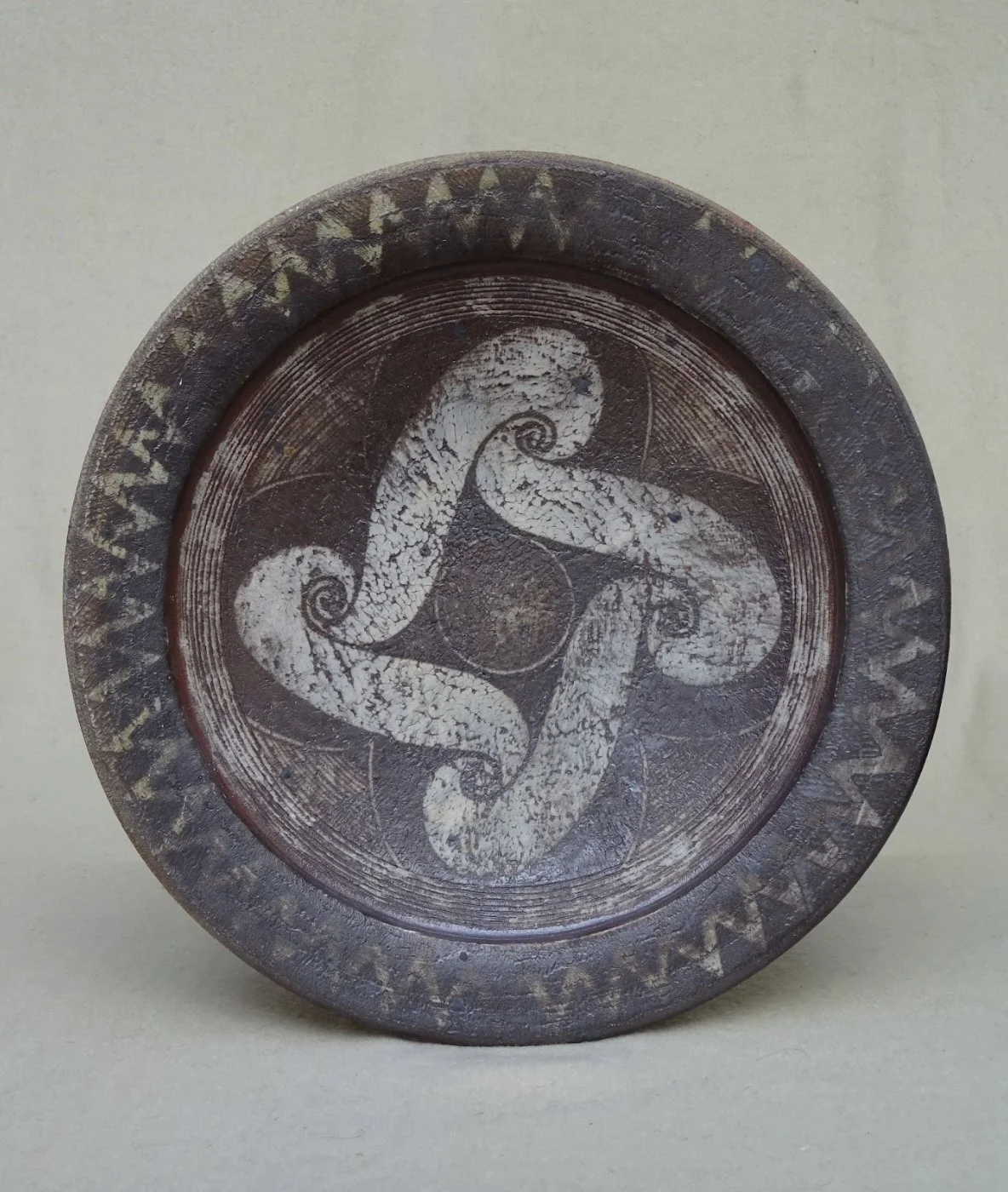
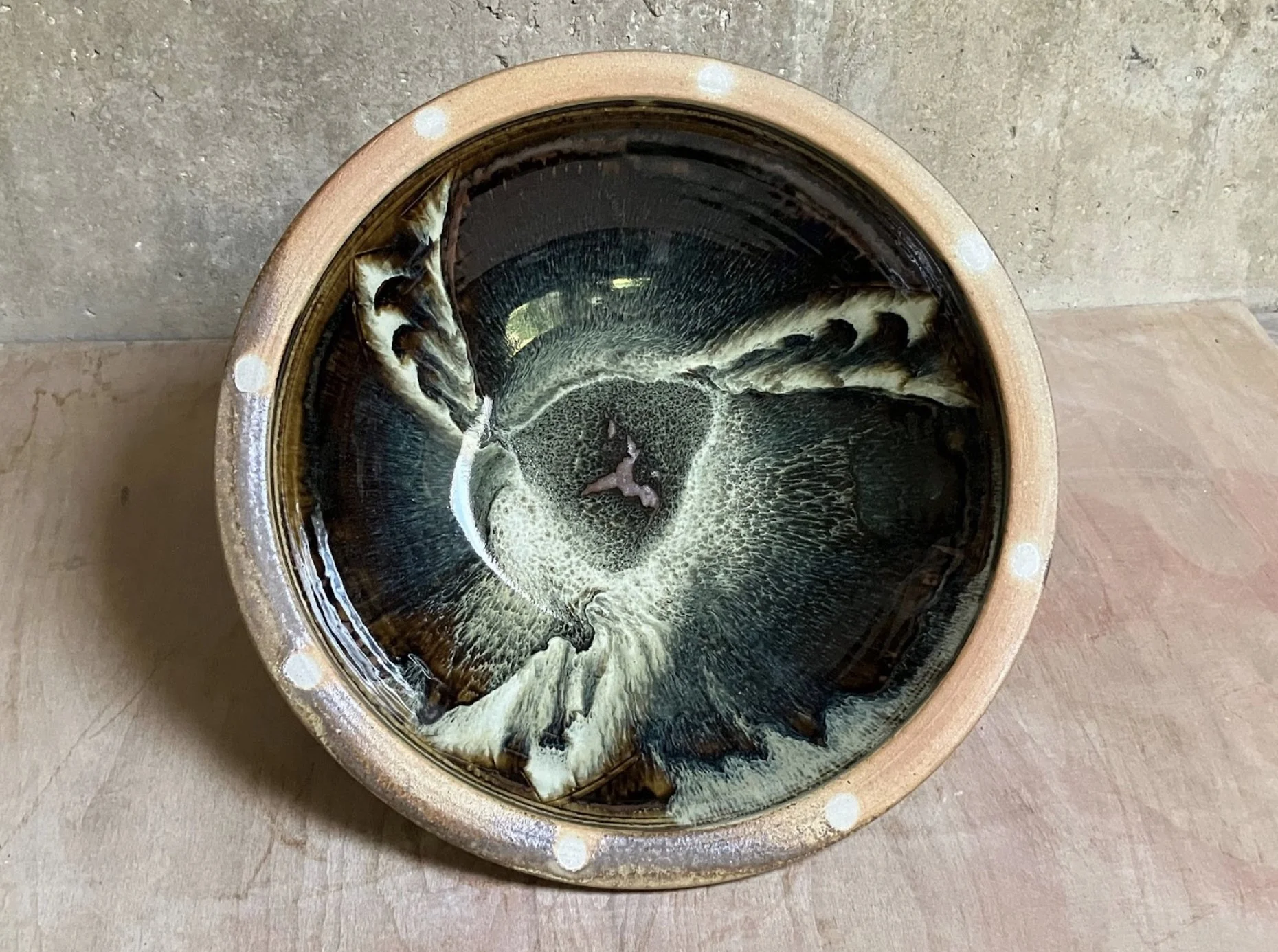
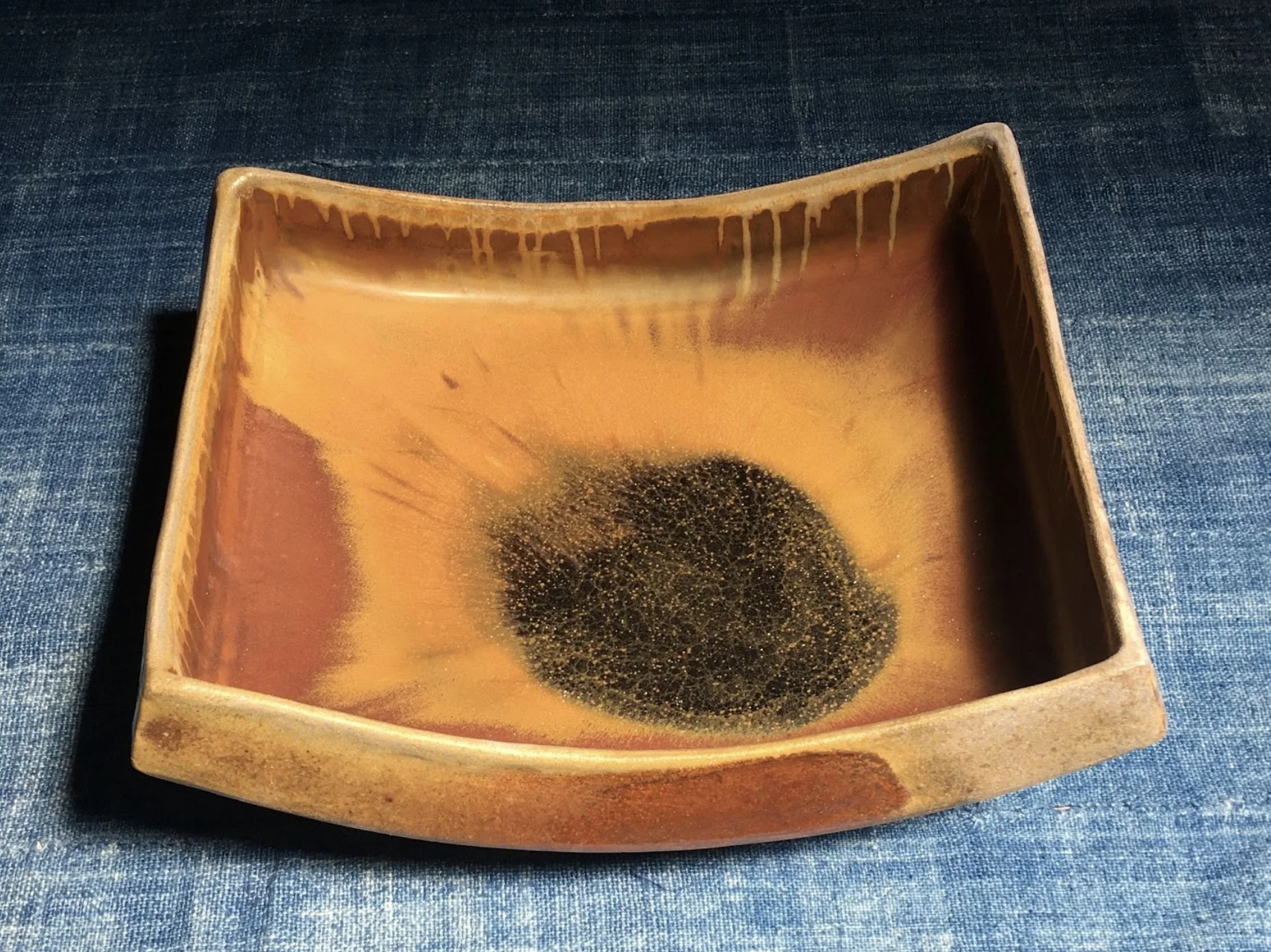
Chris Lewis, anagama fired platter with repeat feather design.
AW: The success of a potter, as with any craft, seems to rely largely on the amount of time you have with your hands on the material itself. Nonetheless, almost all potters will have deeply considered the qualities of clay and have their own set of preferences when it comes to materials. Can you tell us about the type of clay that you use, as well as the glazes and where they can be found ?
CL: I mix my own clay, so it is blended according to what I am going to make with it. Course clay for larger pieces, fine for smaller domestic items. For glaze I use powdered rocks and minerals that are supplied from Stoke-on-Trent. I also use wood ash from specific trees which provides a flux for glazes which gives a lot of variety of colour at high temperature. However, many of my pieces go into the kiln without any applied glaze on the exterior. I then rely on the ash that flies through the kiln to land on the work, which gives it an accidental and random finish. I like the unexpected nature of this firing technique.
AW: You mentioned that you have never imagined any other path for yourself, other than that of the potter – a clarity of vison that I admire greatly. However, you also paint and create sculptural works in the form of wood carving so, what is it about working with clay that kept you coming back over and over again ?
CL: I like the physical nature of working with clay. Part of the day is spent manipulating large amounts of material which gets your blood pumping. At other times the work is focussed and concentrated. Wood carving is very physical almost all the time. Painting by contrast is not energetic enough. Plus, clay is the material I know best, and it is how I have made my living for the past 50 years. I’m not good at multi-tasking, so I find it easier to concentrate on one practice.
AW: Finally, there is this romantic idea that working with clay is a relaxing, almost cathartic practice, maybe even connected to ‘wellness’ in the sense that we might even expect to feel better after we have made some pottery ! Whilst you were quick to point out that the reality might look quite different from the ‘romantic’ ideal, still you must have some near perfect days at home and working in the studio. What does the perfect or ‘dream’ day look like to you ?
CL: Peace and quiet, no interruptions, good music!
Chris Lewis was in conversation with Alex Whittaker during April 2026. His next anagama firing for the year is forthcoming and his annual Summer Exhibition dates are to follow in June. A link to his website is available here.
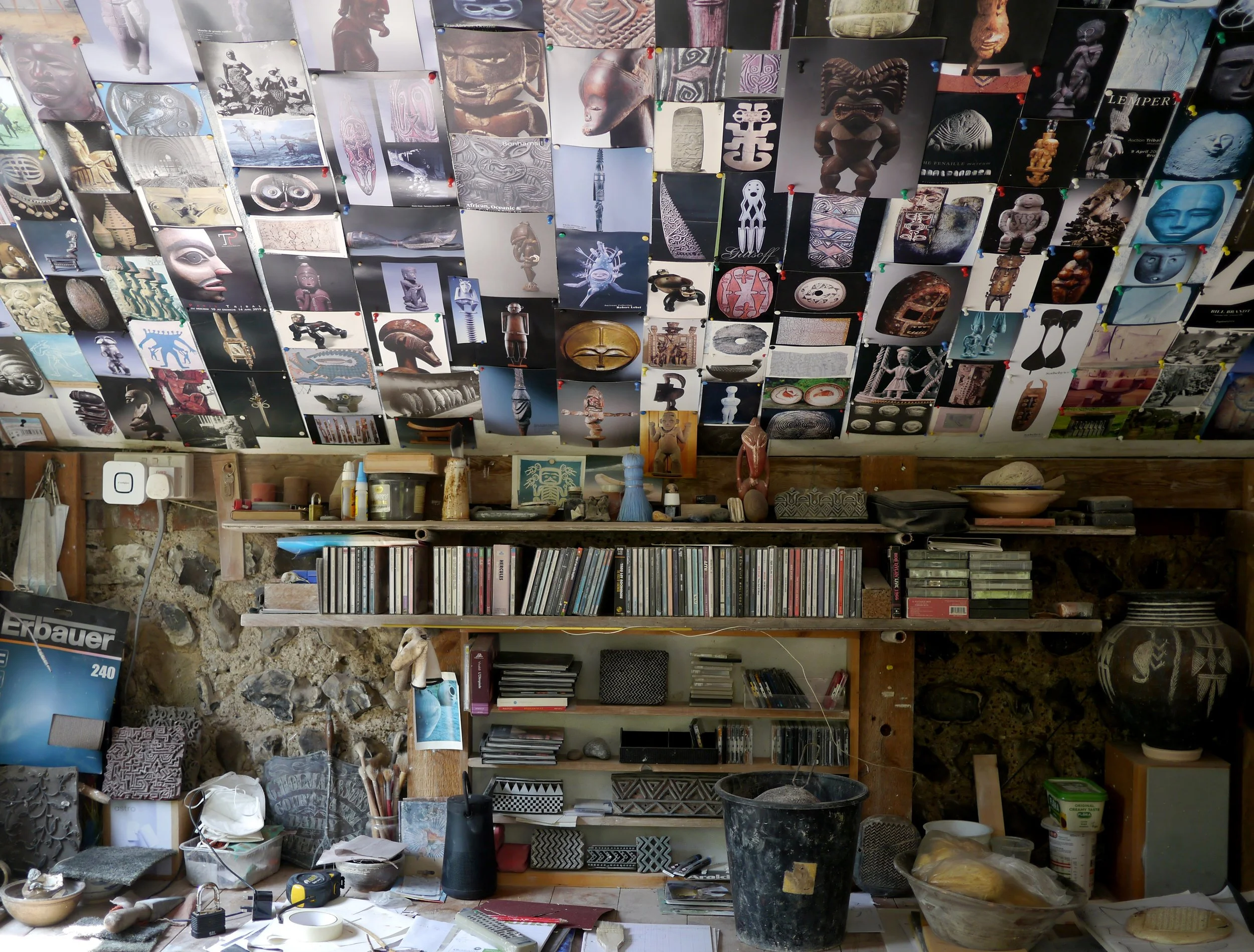
Chris Lewis’ studio South Heighton, East Sussex, England.
Scroll through the gallery for more images below: