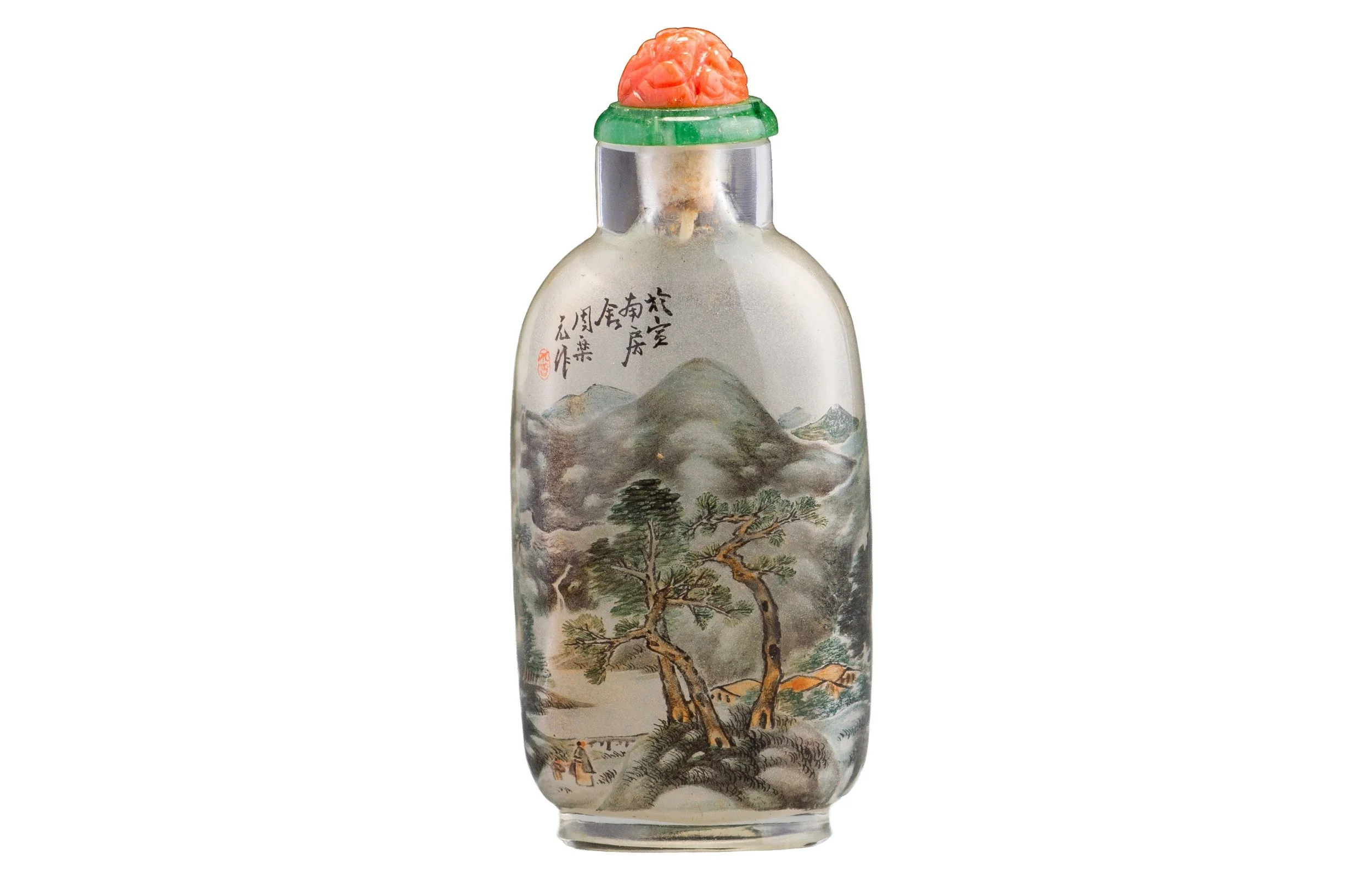
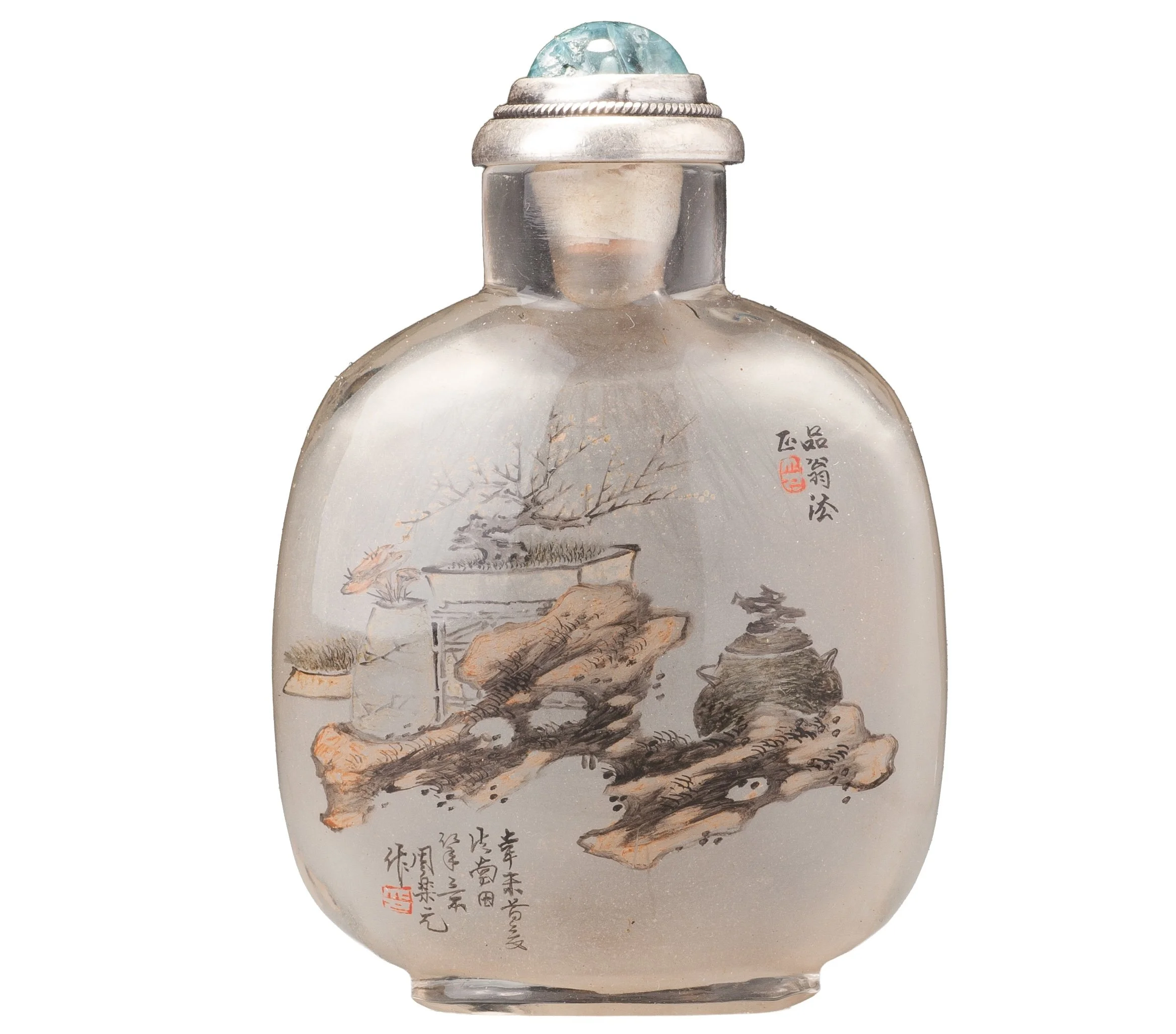
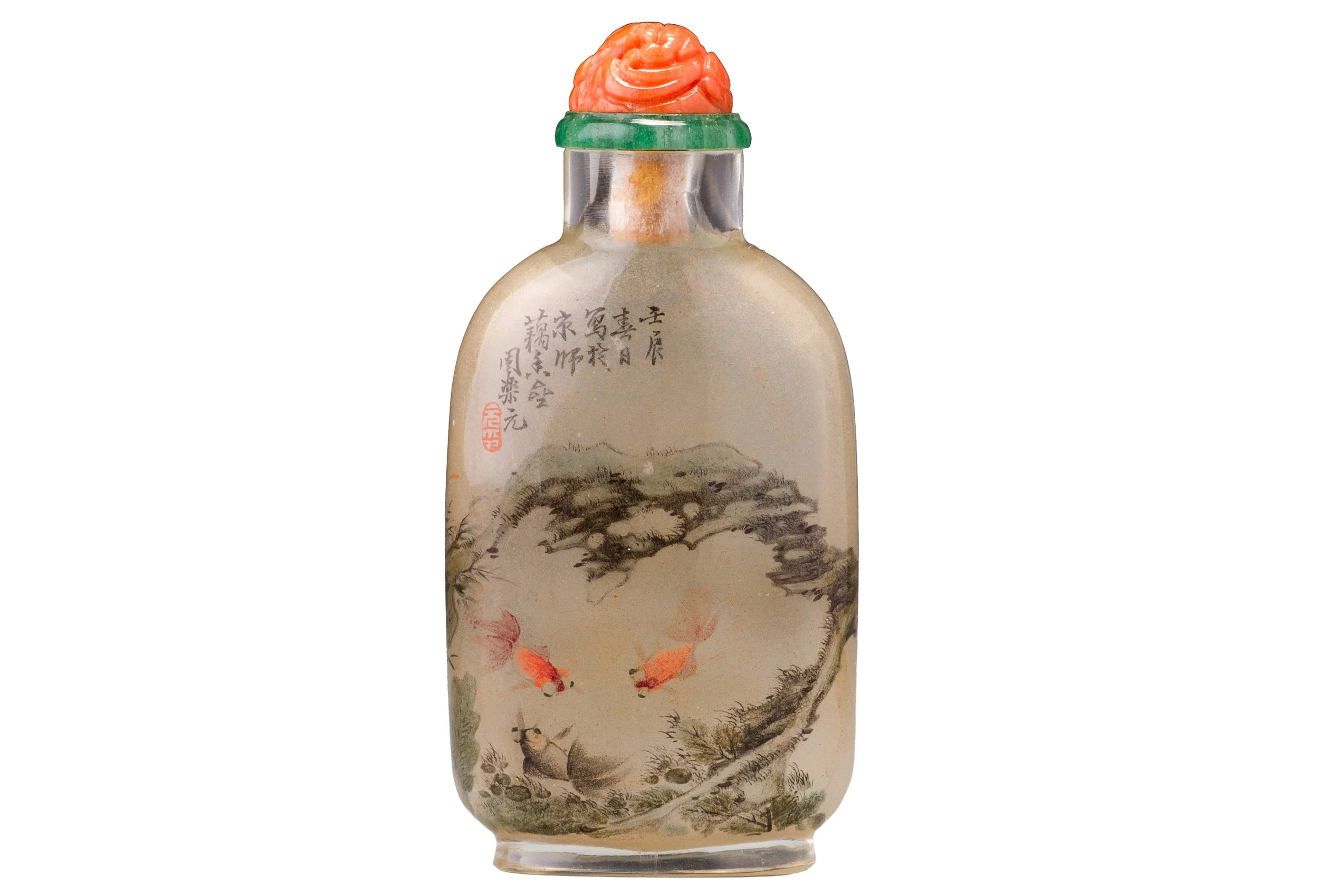
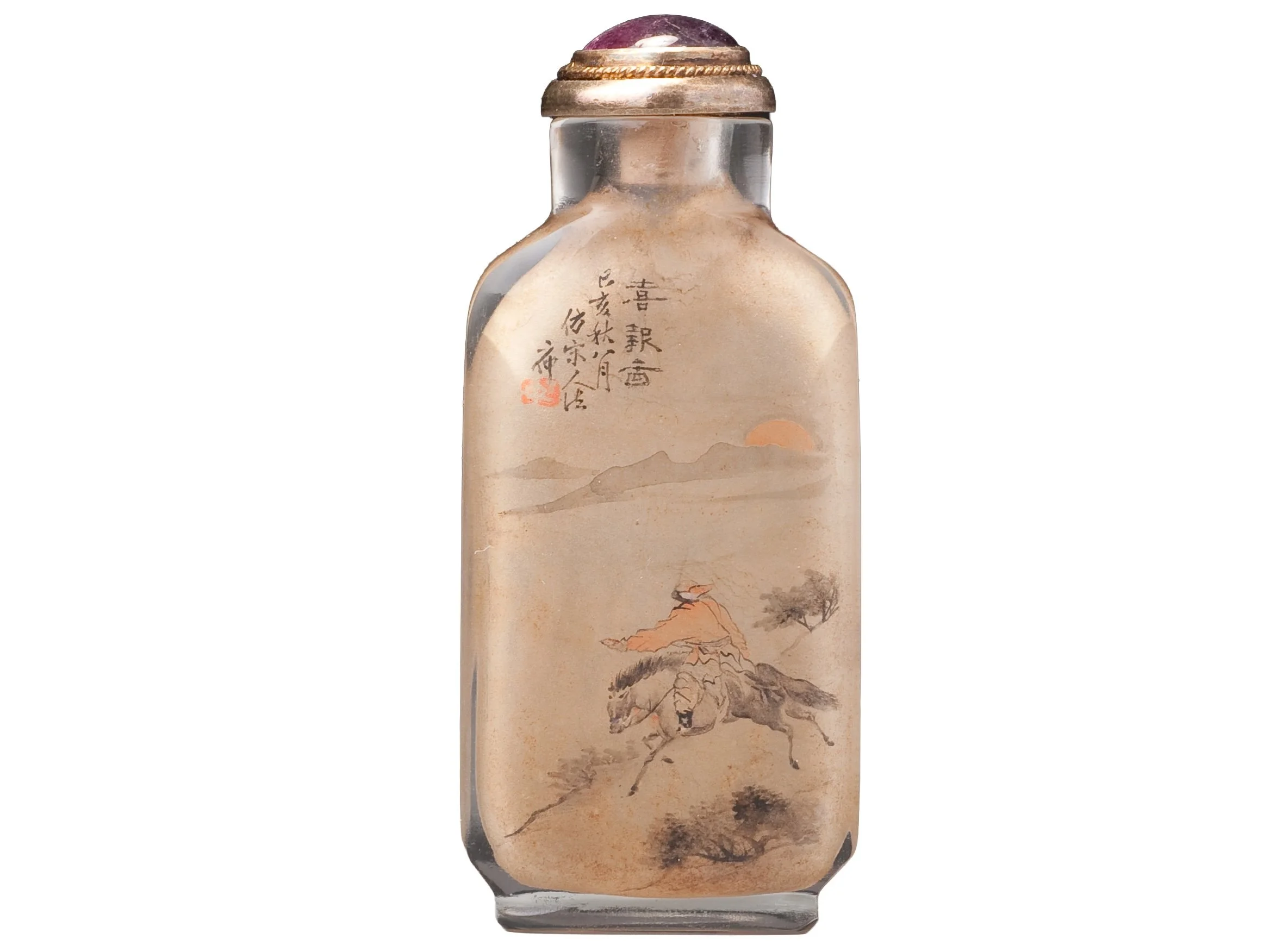
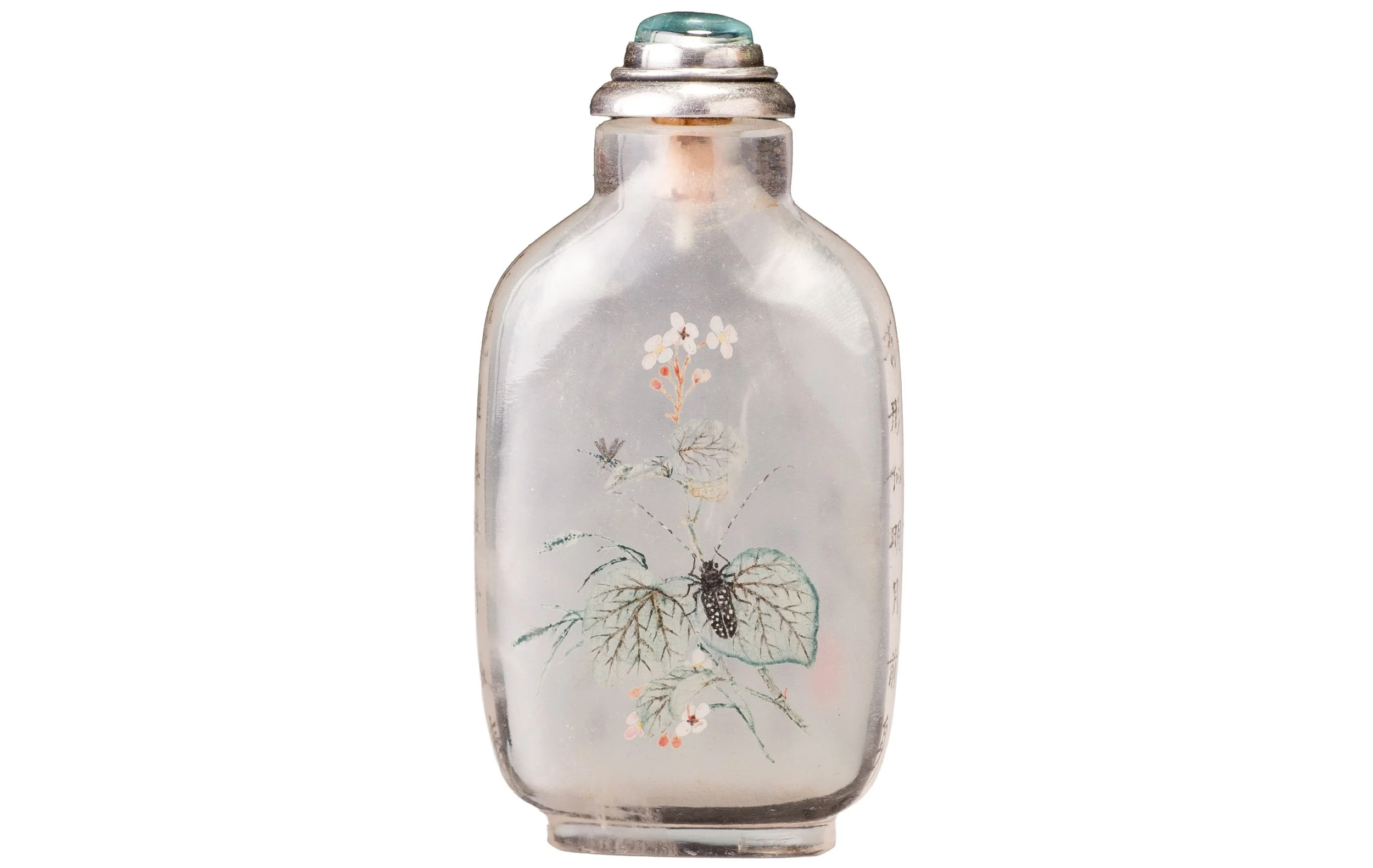
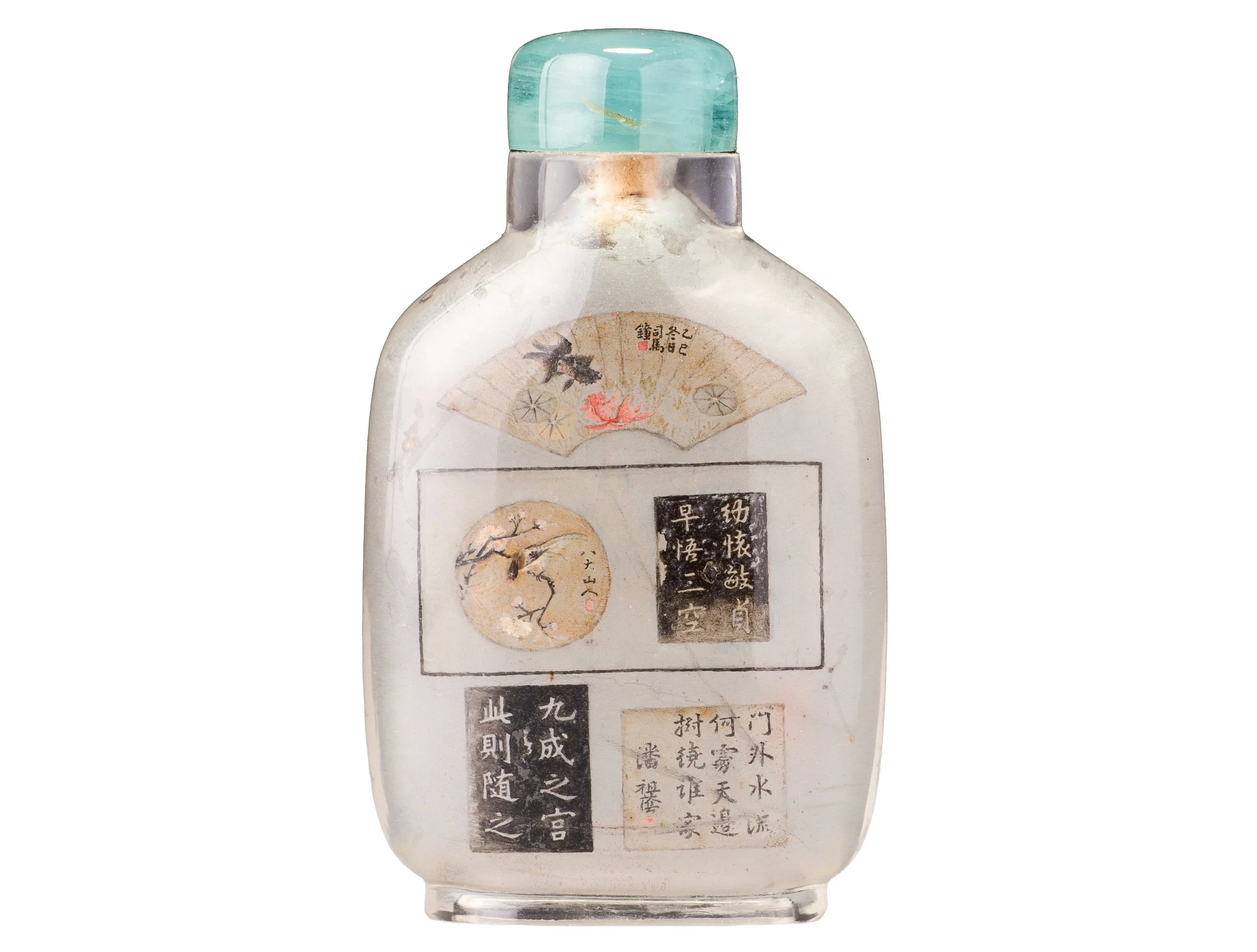
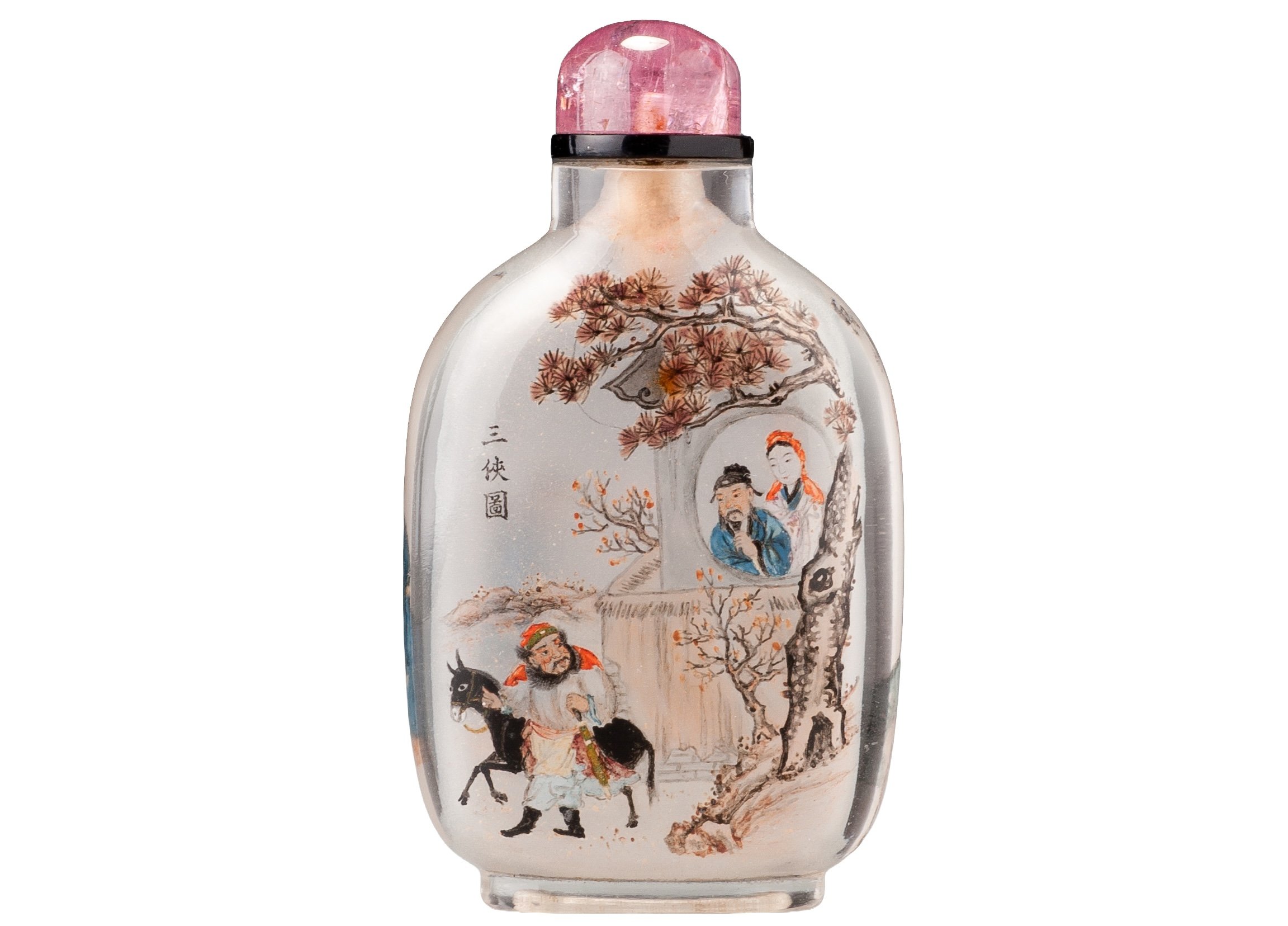
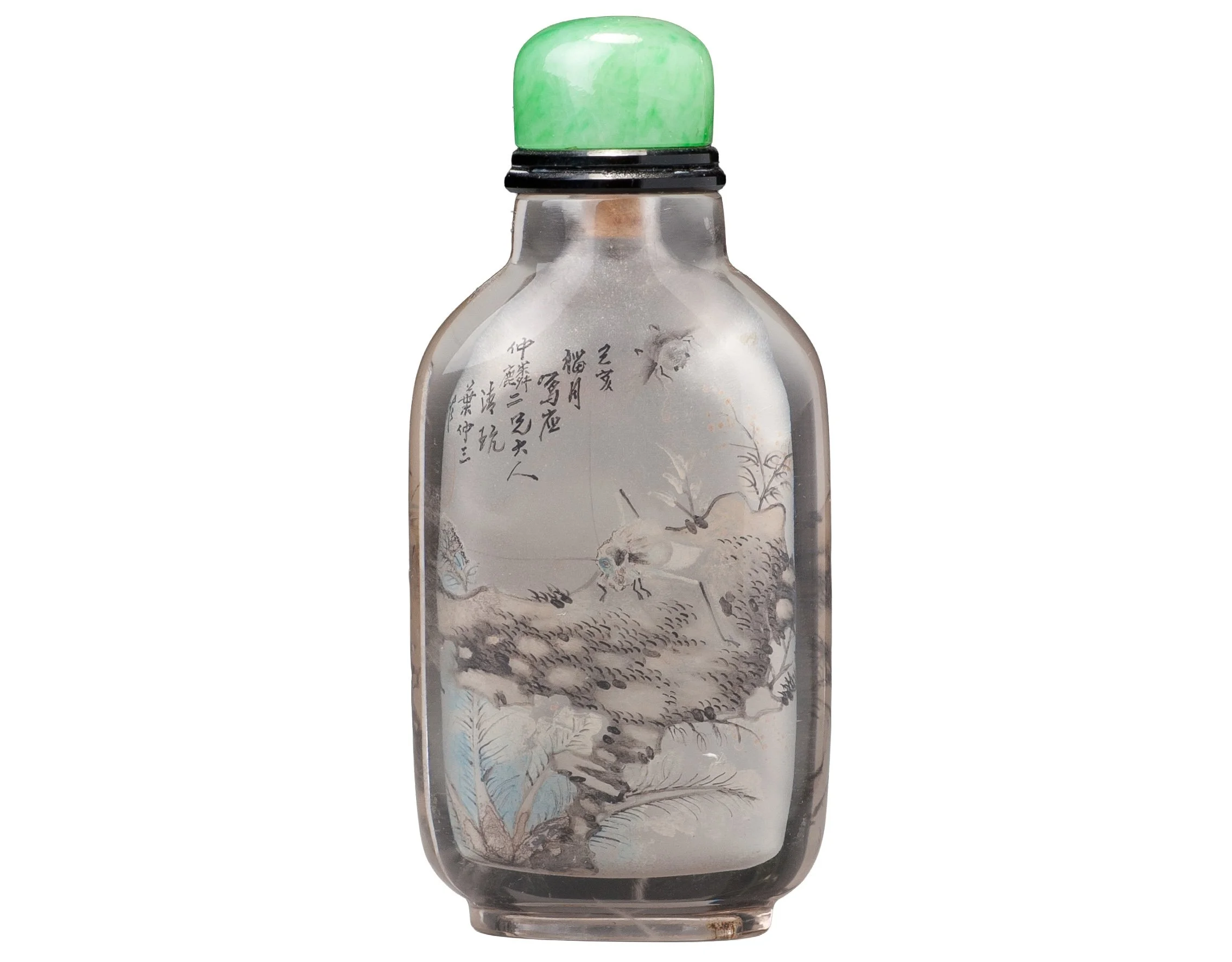
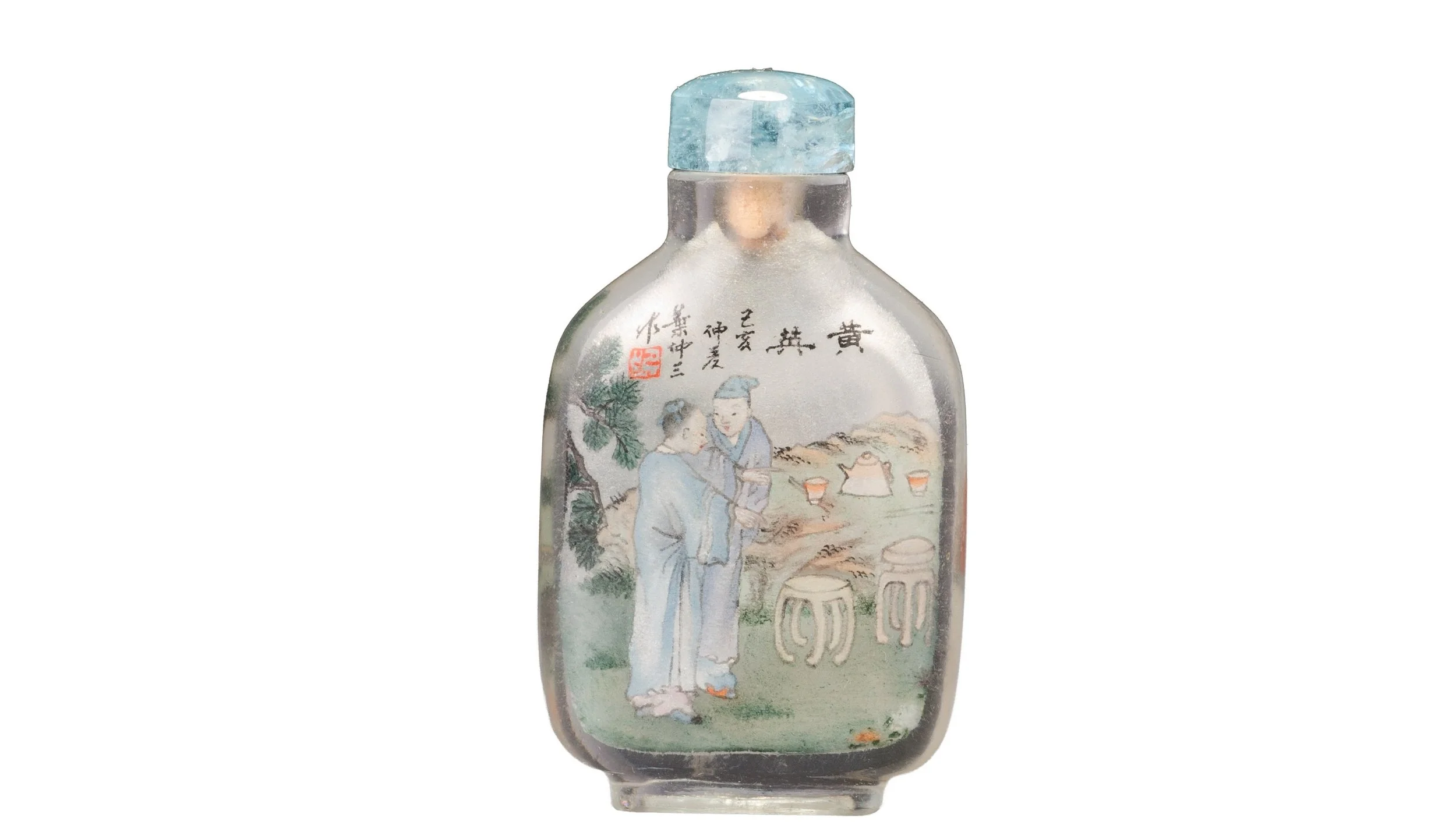
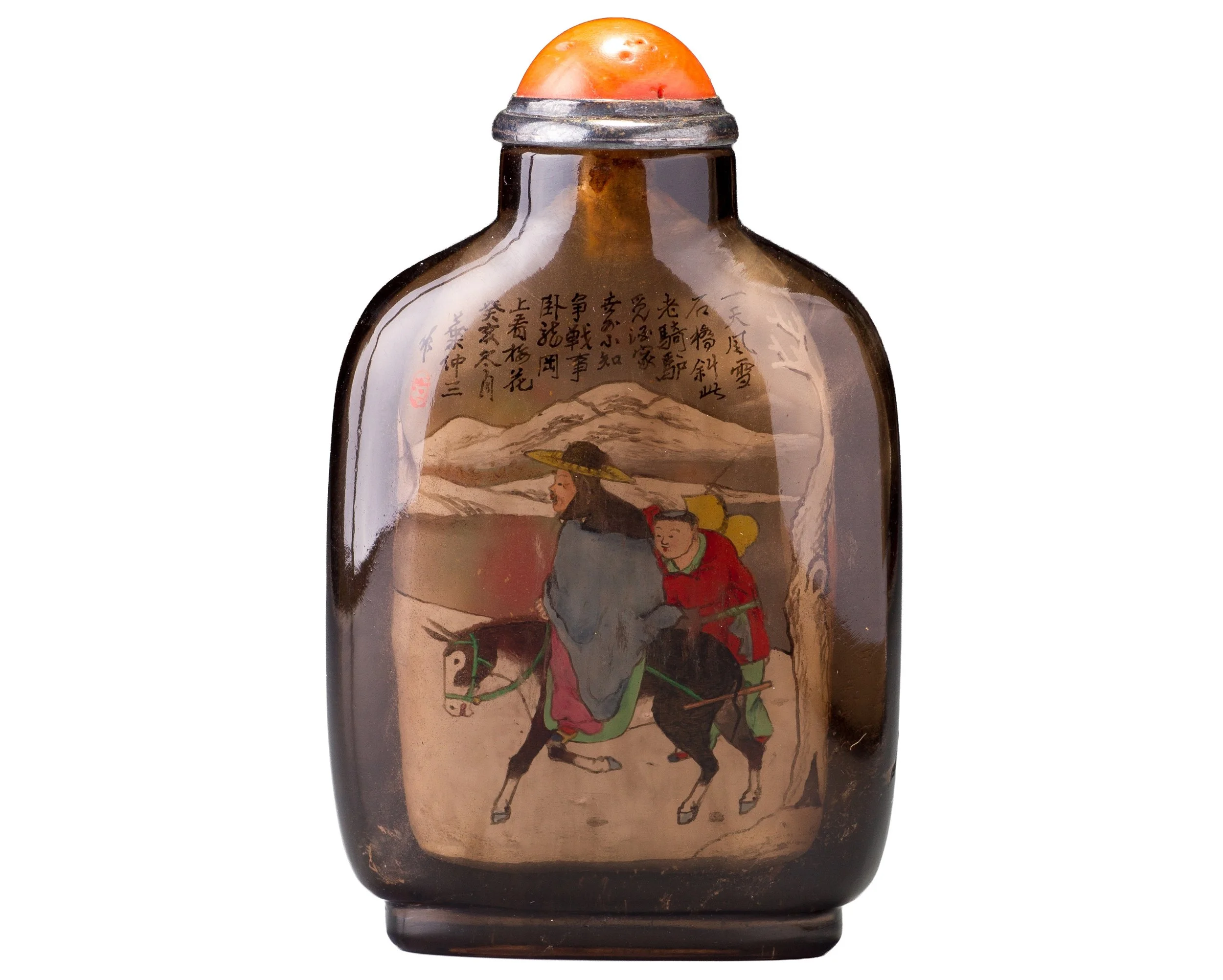
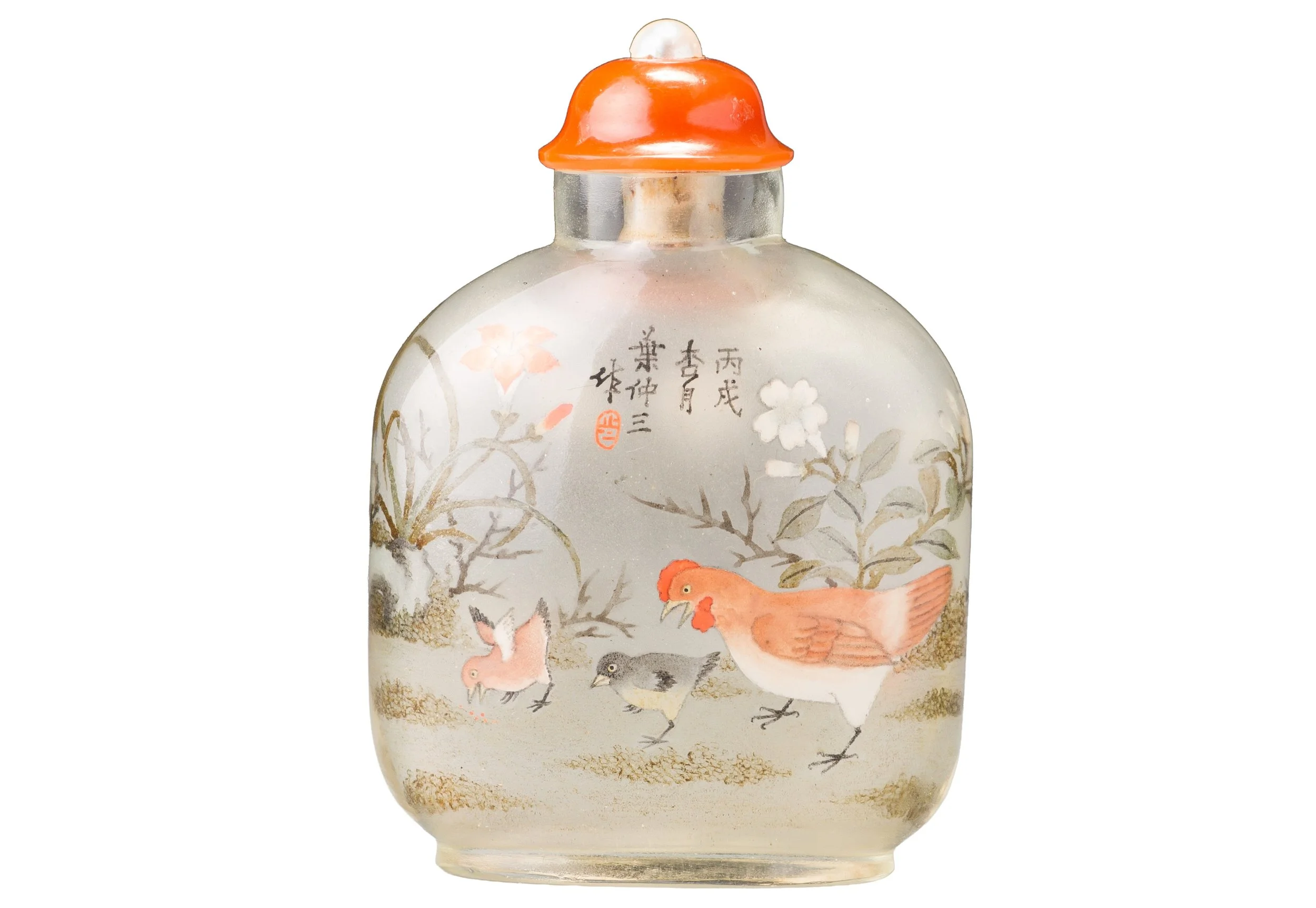
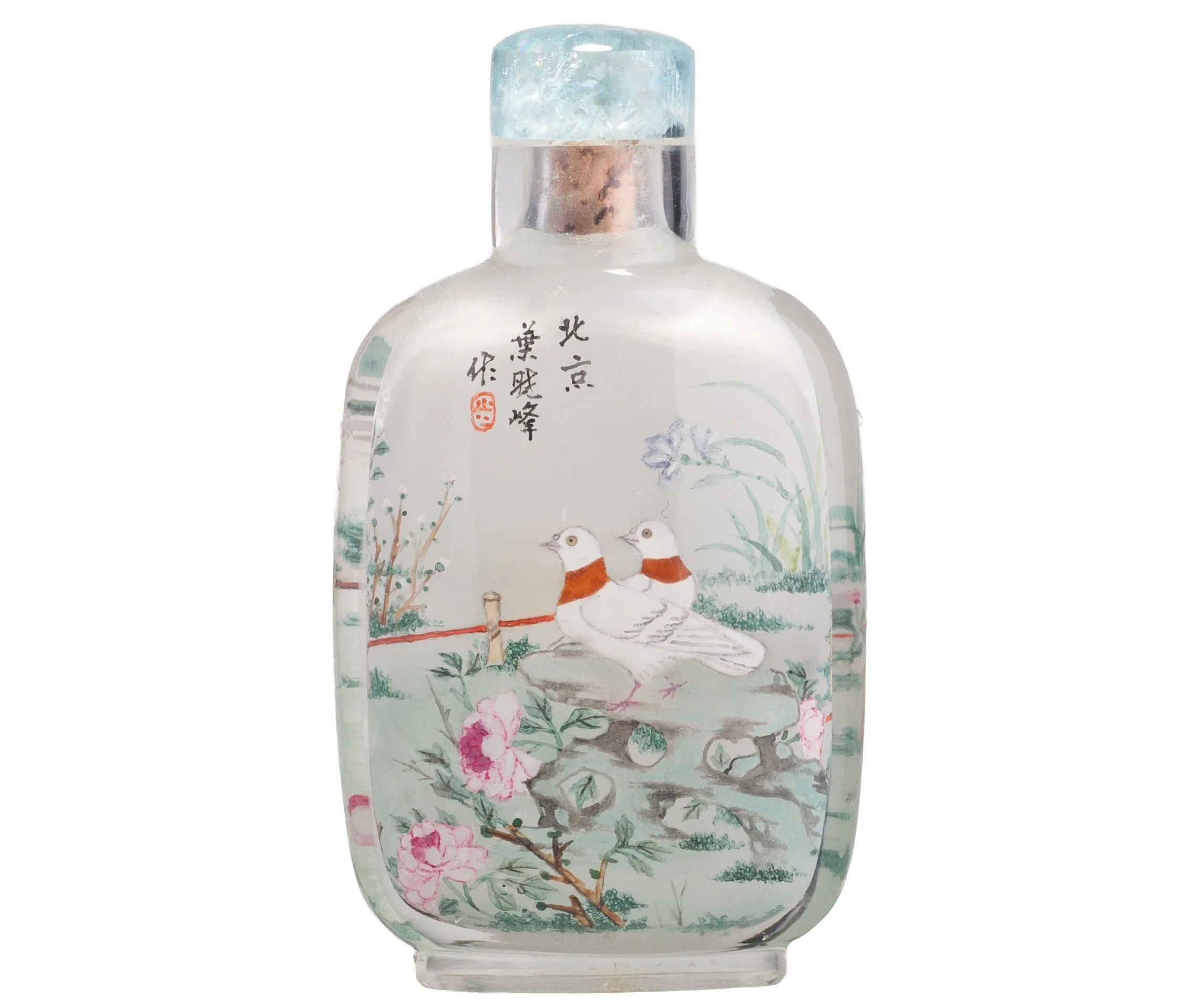

Inside-painted snuff bottles occupy a fascinating place within the wider tradition of Chinese art. The method emerged around the turn of the 19th century, drawing on established Chinese literati traditions of ink painting and calligraphy, particularly landscape (shanshui), bird-and-flower (huaniao), figure painting and the integration of poetry, calligraphy and painting.
Working through the narrow neck, artists painted onto the inside surface of a glass or crystal bottle, often in reverse order, using a tiny hooked brush. The technical challenge was considerable, yet the finest artists still achieved remarkably assured brushwork, composition and calligraphic inscriptions.
The tradition developed considerably during the Qing and Republican periods. Early practitioners such as Gan Xuanwen helped establish the form, while Ma Shaoxuan became one of its best-known later masters. Their work demonstrates how successfully the established language of Chinese painting could be translated into an entirely new and highly specialised medium.
For collectors, this connection is part of what makes these bottles so rewarding. They are not simply miniature paintings, but a meeting point of painting, calligraphy and poetry; craftsmanship condensed into an object small enough to hold in the palm of your hand. The more familiar one becomes with these artists and the traditions which inform them, the more there is to discover.